
December 31, 2025
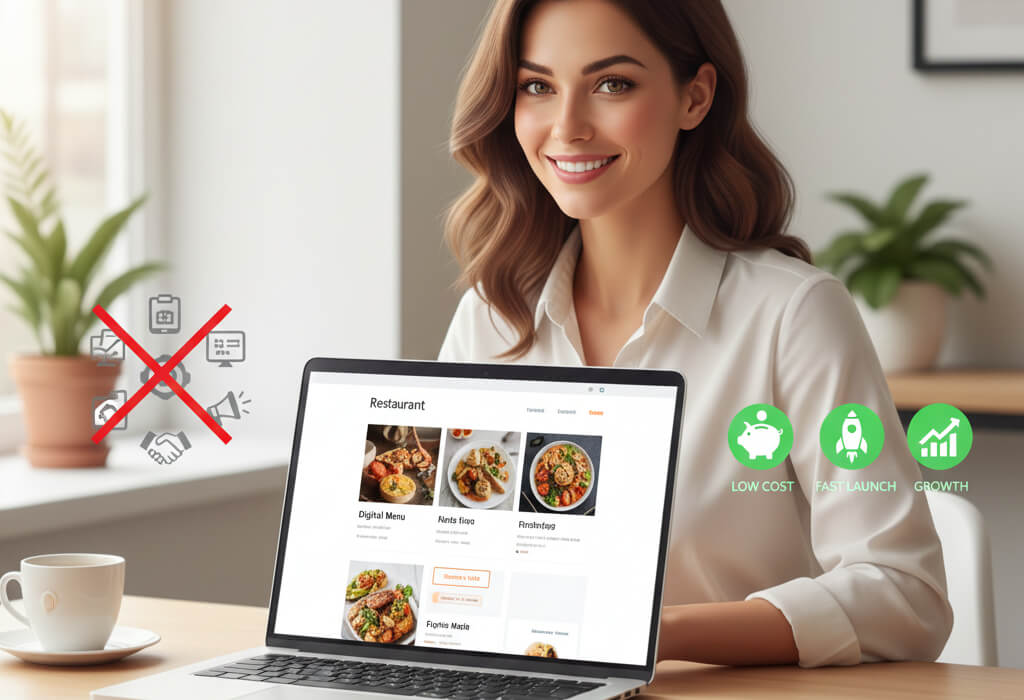
For many restaurant owners, a website feels like a checkbox—something you’re supposed to have, but not something you expect to actively generate revenue. It’s often viewed as branding, not business. An expense, not an investment.
But the truth is this:
A properly built restaurant website doesn’t just look good. It makes money.
In 2025, the most profitable restaurants are not the ones spending the most on ads, delivery apps, or promotions. They’re the ones building smarter digital foundations—starting with websites designed to drive action, reduce dependency, and compound value over time.
A high-performing restaurant website works like a silent salesperson:
Here’s how to build a restaurant website that pays for itself—and then keeps paying you back.
Most restaurant websites fail financially for one simple reason:
They were never built to generate revenue in the first place.
Common issues include websites that:
These websites behave like digital flyers—they inform, but they don’t sell. And like flyers, once they’re printed, they stop working.
A revenue-driven website is different. It’s built with intent:
The first mindset shift is understanding that a restaurant website isn’t marketing fluff—it’s infrastructure.
The real ROI of a restaurant website
Many restaurant owners ask, “Does my website look good?”
The better question is, “Does my website make decisions easy?”
A revenue-focused website answers three questions immediately—especially on mobile:
If a diner has to scroll, hunt, or think, conversion drops.
High-converting restaurant websites consistently include:
Design isn’t about impressing diners—it’s about removing friction from their decision.
Conversion-ready restaurant website checklist
Third-party delivery platforms are convenient—but expensive by design.
When apps take 20–30% per order, they permanently compress margins. That’s not a marketing cost—it’s a profit leak.
A website that accepts direct online orders:
Even modest adoption—shifting 15–25% of orders to direct—can dramatically change monthly profitability.
The most successful restaurants don’t eliminate delivery apps. They rebalance power by using their website as the primary channel.
How to add online ordering without app fees
Why direct ordering always wins long term
Ads rent attention. SEO owns it.
A restaurant website that pays for itself doesn’t rely on constant ad spend. It attracts diners organically—especially those searching with high intent.
Local SEO helps your restaurant:
The key insight:
Local SEO isn’t technical—it’s foundational.
It’s driven by:
Once these basics are in place, SEO compounds over time—bringing in free traffic month after month.
SEO for restaurants explained simply
How restaurants attract local customers organically
Traffic without conversion is just noise.
A profitable restaurant website actively guides visitors toward offline action, such as:
This matters most on mobile, where diners are often:
Every extra step between intent and action reduces revenue. High-performing websites minimize those steps relentlessly.
How websites turn interest into paying diners
Most restaurants underestimate the financial power of their menu page.
In reality, the menu is often:
Optimized online menus:
Digital menus also:
When treated correctly, the menu becomes one of your strongest revenue levers.
Why online menus outperform printed ones
How digital menus improve experience and margins
Before diners spend money, they assess risk.
They ask themselves:
A strong website answers these questions through:
Trust reduces hesitation. Reduced hesitation increases conversion. Increased conversion increases revenue.
This is not branding—it’s behavioral psychology.
How restaurants build trust online
The psychology behind restaurant websites
First-time diners are expensive to acquire. Repeat diners are profitable.
A revenue-focused website captures value after the first visit by:
This turns your website into a long-term asset—not a one-time conversion tool.
Instead of paying repeatedly to reach the same customers, you build a direct communication channel you own.
How to collect emails and build loyalty
Restaurant loyalty programs that actually work
This isn’t theory.
One restaurant increased bookings by 40% simply by improving:
No menu changes.
No ad spend increase.
No gimmicks.
Just a website rebuilt to convert.
How one restaurant increased bookings by 40%
If your website isn’t generating:
…it’s underperforming.
A restaurant website that pays for itself:
When done right, your website becomes one of the highest-ROI assets in your business.
Stop treating your website like an expense.
Start treating it like staff that works 24/7—without payroll, sick days, or commissions.
Stay up to date with the latest tips, expert insights, product reviews, and step-by-step guides to help you grow, create, and succeed—no matter your industry or passion.