
December 29, 2025
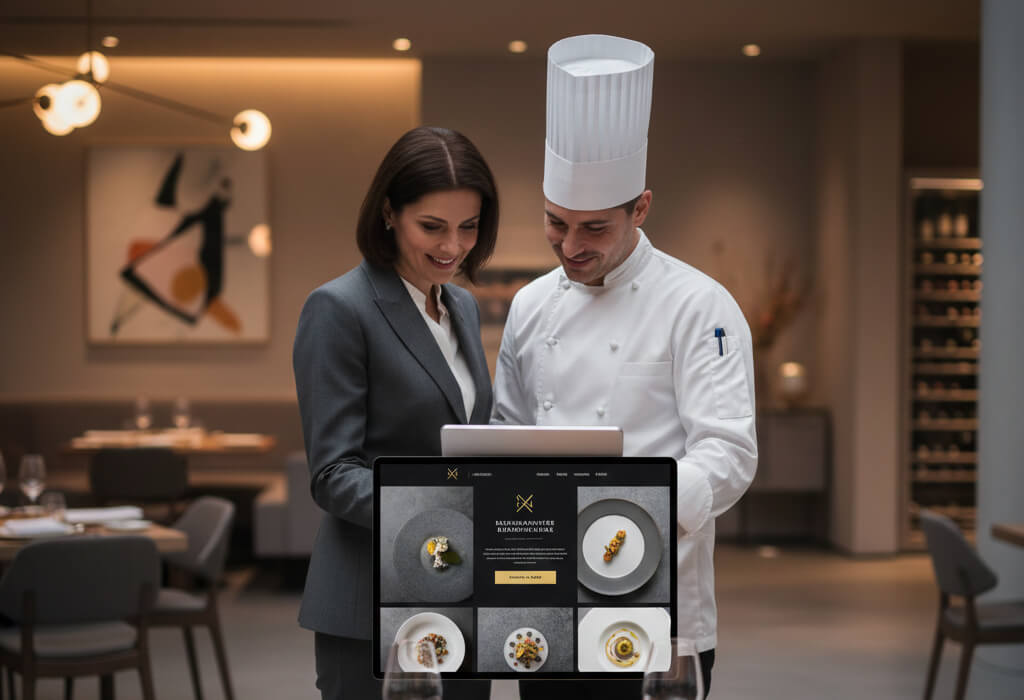
Michelin-starred restaurants are often described as places with extraordinary food—but that description is incomplete. Plenty of restaurants serve excellent dishes. What separates Michelin-level establishments is their ability to deliver a flawless, intentional experience at every touchpoint.
Nothing feels accidental. Nothing feels improvised. From the first Google search to the final dessert, the guest experience is guided by clarity, restraint, and confidence.
Online branding plays a critical role in this. Long before a diner tastes the food, they’ve already formed expectations based on the restaurant’s website, visuals, language, and digital presence.
For independent restaurants, the lesson is clear:
Great online branding isn’t about being expensive or trendy—it’s about being deliberate.
Here’s how Michelin-starred restaurants approach their online presence—and how you can apply the same thinking to your own restaurant.
Michelin-starred restaurants never allow their identity to be shaped by third-party platforms alone.
Review sites, delivery apps, and social media may influence discovery, but they are fragmented and opinion-driven. Michelin-level restaurants understand that perception needs context—and only the restaurant itself can provide that context.
Their websites clearly articulate:
This storytelling isn’t marketing fluff—it’s expectation management. When diners understand the intent behind a restaurant, they arrive aligned rather than uncertain.
Independent restaurants often rely on bios, reviews, or Instagram captions to explain themselves. The result is a scattered narrative. Michelin-level restaurants centralize their story in one place—the website—where it can be told clearly and completely.
That’s why owning your narrative through a strong website is essential.
Michelin-level websites rarely overwhelm visitors. Instead, they feel calm, restrained, and intentional.
Minimalism here isn’t about aesthetics—it’s about decision clarity.
Every element exists for a reason:
Nothing competes for attention. Nothing creates hesitation.
This design philosophy mirrors the dining experience itself—focused, composed, and confident. When users don’t have to search for information, they subconsciously trust the brand more.
Many independent restaurant websites suffer from feature overload: banners, pop-ups, sliders, and excessive text. Michelin-level sites do the opposite—they remove friction instead of adding noise.
Purposeful simplicity builds confidence.
Michelin-starred restaurants understand that imagery sets expectations faster than words ever can.
That’s why they don’t rely on random customer photos or inconsistent social media imagery. Instead, their websites present a carefully curated visual narrative.
This includes:
These visuals are not exaggerated or theatrical. They are honest, controlled, and refined—just like the dining experience.
When visuals are intentional, diners subconsciously associate the restaurant with professionalism, quality, and care. Poor or inconsistent imagery, on the other hand, introduces doubt.
This is why visuals are one of the strongest trust signals on a restaurant website.
At Michelin-starred restaurants, the menu is treated as a design object—not just a list of items.
Every aspect is considered:
Online menus follow the same standards. They are easy to read on mobile, visually consistent with the website, and always up to date.
Independent restaurants often upload PDFs, clutter descriptions, or neglect digital menus altogether. Michelin-level restaurants recognize that the menu is one of the most visited pages on their site—and often the final step before a reservation.
A clean, thoughtful menu communicates confidence and professionalism before a single dish is ordered:
Michelin-starred restaurants feel cohesive no matter where you encounter them.
Whether a diner finds the restaurant through Google, a press article, a reservation platform, or the website, the experience feels unmistakably the same.
This consistency includes:
Consistency removes uncertainty. When branding is aligned, diners feel reassured that the restaurant is well-managed and intentional.
Inconsistent branding—different logos, mismatched photos, conflicting descriptions—creates friction and erodes trust.
Recognition builds familiarity. Familiarity builds confidence.
Michelin-level websites rarely try to “sell.”
There are no urgency tactics, no flashing banners, and no intrusive pop-ups. Instead, the site presents information clearly and lets the quality speak for itself.
This restraint reflects a deeper understanding:
Confidence doesn’t need persuasion—it needs clarity.
By removing pressure and distraction, Michelin-starred restaurants signal that they know their value. The website feels like an extension of the dining room—quiet, composed, and self-assured.
This psychological effect applies to every restaurant, regardless of price point.
Michelin-starred restaurants use social media to support visibility—but not to define their brand.
The website remains the central hub for:
By keeping everything anchored to the website, they maintain full control over presentation and messaging.
This reduces reliance on algorithms and ensures that diners always experience the brand as intended.
Michelin-starred restaurants think beyond short-term wins.
Their websites are built to:
Rather than chasing design trends, they focus on timeless structure, clarity, and brand alignment.
This long-term mindset is why restaurants with strong websites consistently outperform those that rely solely on third-party platforms.
Improving clarity, visuals, and messaging isn’t just cosmetic—it’s measurable.
Restaurants that upgraded their website experience saw increases in bookings, engagement, and perceived value. One restaurant increased bookings by 40% after aligning its website with its brand standards: The ROI of a Restaurant Website — What Owners Need to Know
You don’t need a Michelin star to adopt Michelin-level branding.
You need:
The most successful restaurants understand one core truth:
Your brand is experienced long before the first bite.
Build your website with the same care you bring to your kitchen—and diners will feel it.
Stay up to date with the latest tips, expert insights, product reviews, and step-by-step guides to help you grow, create, and succeed—no matter your industry or passion.