
September 10, 2025
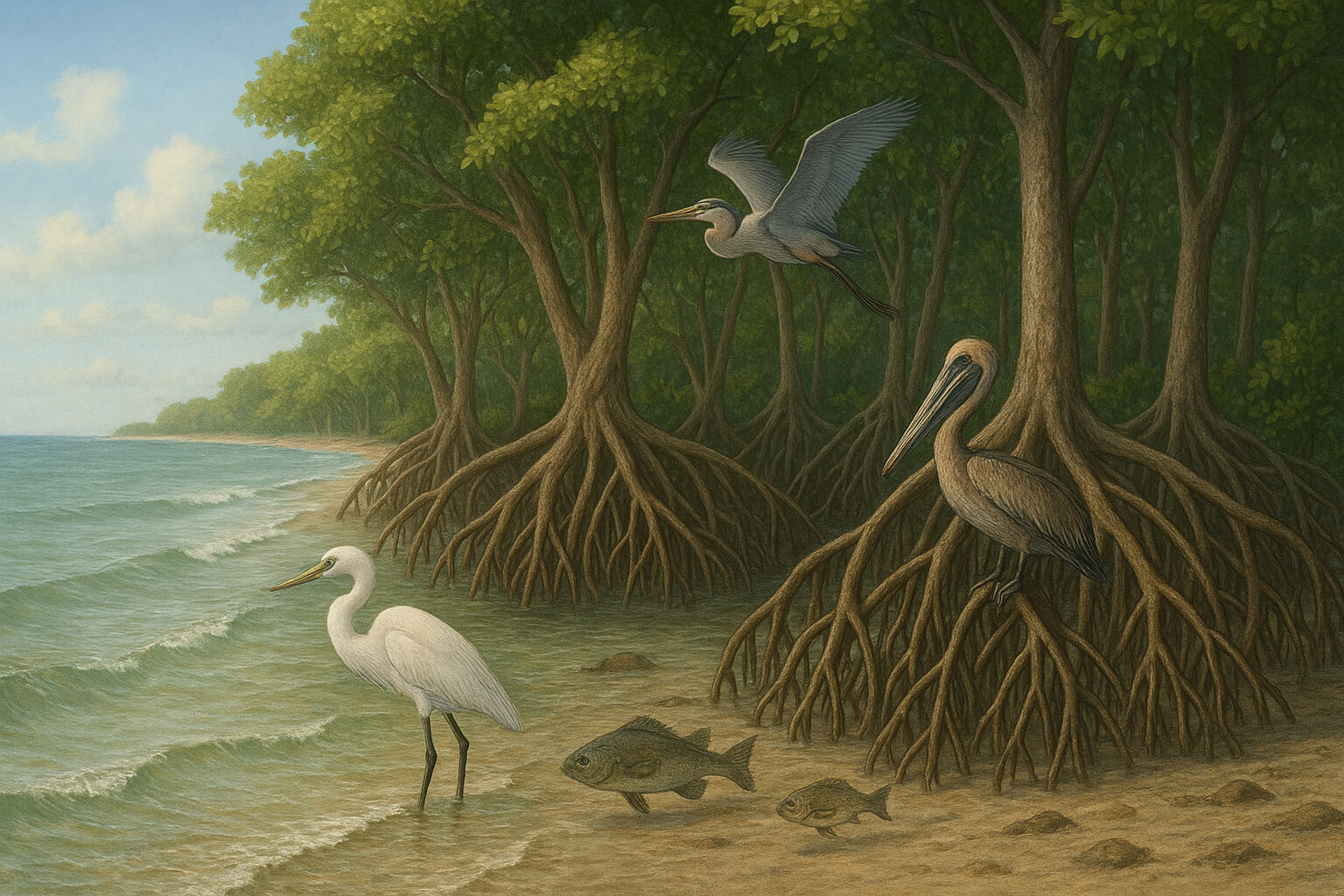
Mangrove forests are among the planet’s most ecologically valuable and versatile ecosystems, yet they often receive less attention than rainforests or coral reefs. Found along tropical and subtropical coastlines in over 120 countries, mangroves are uniquely adapted to thrive in salty, oxygen-poor soils—a harsh environment where few other trees can survive.
These forests offer a powerful combination of ecological, economic, and social benefits, playing a critical role in protecting shorelines, supporting biodiversity, and mitigating climate change. However, they face mounting threats that jeopardize their survival and the well-being of millions who depend on them.
One of the most essential roles of mangroves is serving as natural coastal defenses. Their complex, above-ground root systems act like living sea walls, absorbing the energy of storm surges, wind-driven waves, and rising tides. This protective buffer significantly reduces the impact of extreme weather events, such as cyclones, hurricanes, and tsunamis.
Additionally, mangroves trap sediments with their roots, helping to stabilize shorelines and reduce coastal erosion, a growing problem due to sea level rise and human development.
For a broader look at ecosystem restoration and nature-based solutions, see Understanding Ecosystem Restoration.
Mangroves are considered one of the most effective natural carbon sinks on Earth. Unlike most trees, they sequester carbon not just in their biomass but deep within waterlogged soils, where it can remain trapped for thousands of years.
This ability to lock away “blue carbon” (carbon stored in coastal ecosystems) makes mangroves a crucial ally in fighting climate change. Unfortunately, when mangrove forests are destroyed, they release vast amounts of this stored carbon back into the atmosphere, turning a powerful carbon sink into a dangerous source of emissions.
Related Resource: UNEP – The Importance of Mangroves
Mangroves are biodiversity treasure troves, providing critical habitat for an astonishing variety of species:
By acting as an ecological bridge between land and sea, mangroves support both terrestrial and marine biodiversity. Their health is essential to the balance of entire coastal ecosystems and to global food security.
For more on why biodiversity matters, check out Why Biodiversity Matters
Beyond their environmental services, mangroves provide tangible economic and cultural benefits to millions of people:
Related Resource: IUCN – Mangroves for Coastal Resilience
Despite their immense value, mangrove ecosystems are disappearing at alarming rates. In the past half-century, over 35% of the world’s mangroves have been destroyed due to:
In some regions, deforestation rates of mangroves are three to five times higher than tropical rainforests. Once lost, mangrove ecosystems are incredibly difficult and costly to restore, making protection far more effective than rehabilitation.
Learn more about sustainable solutions in The Circular Economy: A New Approach to Resources
Even if you don’t live near a mangrove forest, there are meaningful actions you can take:
Many international organizations offer volunteer opportunities and donation-based programs that help fund mangrove planting, education, and research.
Mangrove forests are not just patches of trees near the ocean—they are essential lifelines for people and the planet. They act as natural fortresses against climate disasters, absorb vast amounts of carbon, sustain vital biodiversity, and provide livelihoods to millions. Yet, they continue to vanish under pressure from human activity and climate change.
Protecting and restoring mangrove ecosystems isn’t just a conservation goal—it’s a global imperative for climate resilience, food security, and sustainable development. By valuing and investing in mangroves today, we ensure a more secure and balanced world for future generations.
Stay up to date with the latest tips, expert insights, product reviews, and step-by-step guides to help you grow, create, and succeed—no matter your industry or passion.


