
The Importance of Composting: Reducing Landfill Waste

August 20, 2025

By RocketPages

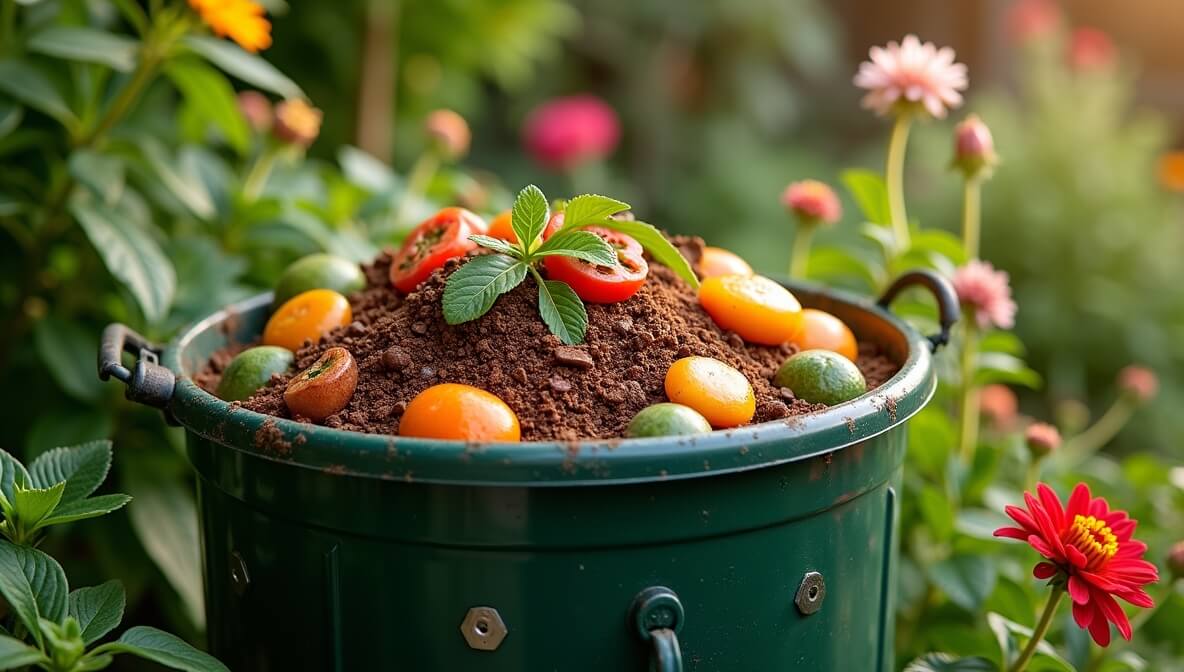
Backyard compost bin with food scraps and garden waste reducing landfill waste.

Composting is one of the most powerful — and accessible — tools we have to fight landfill overflow, climate change, and soil degradation. By transforming everyday organic waste into nutrient-rich soil, composting turns trash into treasure, helping to close the loop in nature’s cycle.

Whether you live in a suburban home or a small apartment, composting is a low-cost, high-impact habit that promotes environmental health and individual responsibility.

Why Composting Matters

Globally, we waste an estimated 1.3 billion tons of food annually — much of it ends up in landfills, where it doesn’t just disappear. Instead, it breaks down anaerobically (without oxygen), releasing methane, a potent greenhouse gas with 25x the warming power of CO₂ over a 100-year period (EPA).

According to the United Nations Environment Programme (UNEP), food waste accounts for 8–10% of global greenhouse gas emissions.

Composting Offers a Simple, Scalable Solution:

  • It uses oxygen to break down waste aerobically, preventing methane.
  • It transforms waste into valuable, fertile compost, reducing reliance on chemical fertilizers.
  • It lowers garbage collection costs, easing the strain on municipalities and taxpayers.

Composting supports circularity — instead of treating waste as an endpoint, it becomes part of a regenerative process.

Key Environmental Benefits of Composting

1. Reduces Landfill Volume

  • Compostable materials — including food scraps, leaves, and paper — can make up 30–50% of household trash. Diverting them from landfills frees up space and extends landfill lifespans.

2. Lowers Greenhouse Gas Emissions

  • By avoiding anaerobic decomposition, composting significantly reduces methane emissions. Studies show that municipal composting programs can cut citywide landfill emissions by over 20%.

3. Improves Soil Structure and Fertility

  • Compost improves soil aeration, nutrient retention, and microbial activity. Healthier soil:
  • Grows more nutrient-dense crops
  • Retains moisture longer (important in drought-prone areas)
  • Prevents erosion

4. Reduces Chemical Dependency

  • By enriching soil naturally, composting reduces the need for synthetic fertilizers, which often leach into waterways and cause harmful algae blooms.

5. Builds Environmental Literacy

  • People who compost become more aware of:
  • What they consume
  • How much food they waste
  • How individual actions affect ecosystems

How to Start Composting at Home

You don’t need a huge yard or a green thumb. Composting is flexible and adaptable. Here’s how:

1. Pick Your System

  • Backyard composting bin or pile – For gardens and green space
  • Indoor kitchen bin – With carbon filters to control odor
  • Bokashi fermentation – Ideal for meat and dairy scraps
  • Vermicomposting – Uses worms (typically red wigglers) to break down scraps, great for indoors

2. Know What to Compost

  • Compostable:
  • Fruit and veggie scraps
  • Coffee grounds and filters
  • Eggshells
  • Tea bags (non-synthetic)
  • Yard waste (leaves, grass)
  • Shredded cardboard/newspaper
  • Avoid:
  • Meat, fish, dairy (attracts pests)
  • Oily foods and sauces
  • Pet waste (unless processed through specialized systems)
  • Diseased plants or pesticide-treated materials
  • Bonus Tip: Keep a countertop bin lined with compostable bags for convenience.
  • For more step-by-step guidance, visit NRDC’s Composting 101.

Composting Beyond the Home

While personal composting is impactful, larger-scale efforts amplify results:

  • Municipal Composting Programs
  • Many cities and towns now offer:
  • Curbside pickup for organic waste
  • Drop-off locations at farmers’ markets or community centers
  • Community gardens that use shared compost systems
  • Community-Driven Projects
  • Volunteer-led composting co-ops, school garden initiatives, and neighborhood drop bins make composting accessible for apartment dwellers or low-income communities.
  • For more community-based success stories, check out:
  • RocketPages’ food bank feature — it highlights how local networks improve food systems, reduce waste, and enhance public health.

Composting and Youth Education

Teaching children to compost can:

  • Build eco-literacy early
  • Connect them with food systems and agriculture
  • Foster a sense of environmental responsibility

Youth mentorship programs are beginning to incorporate composting and sustainability into leadership training. For inspiration, explore: Mentorship Matters: Inspiring Future Leaders

Final Thoughts

“Composting is not a waste management strategy — it’s an act of regeneration.”

It’s a tangible way to care for the planet from your own kitchen. Whether you’re feeding a backyard garden or simply reducing your weekly trash, your banana peels, coffee grounds, and autumn leaves can become life-giving soil instead of toxic methane.

Small, consistent actions matter. Composting empowers individuals, schools, and communities to reconnect with the natural cycle, reduce environmental harm, and build a more sustainable future.

Resources & Further Reading

Recent Articles

Stay up to date with the latest tips, expert insights, product reviews, and step-by-step guides to help you grow, create, and succeed—no matter your industry or passion.


Portrait studio with a sitter, soft key light and camera demonstrating directional portrait lighting
Portrait Lighting Patterns: Split, Loop and Rembrandt
Judge the light on the faceA portrait lighting pattern describes the arrangement of light and shadow on the face. It is different from the make of the light, the background color, or the overall editi...
Read More
Two educators reviewing curriculum books, sample worksheets and a checklist in a school library
Choosing a School Curriculum: A Practical Review Checklist
Clarify what decision you can makeChoosing a curriculum is different from choosing a school. A curriculum concerns the sequence of knowledge, skills, learning activities, and assessment, together with...
Read More
Teacher supporting a student using geometric learning materials and a notebook in a classroom
Personalized Learning Approaches: Goals, Support and Feedback
Begin with a learning goalPersonalized learning involves making informed choices about instruction and support for a learner. Start with the knowledge or skill being developed, not with a product or a...
Read More
