
December 26, 2025
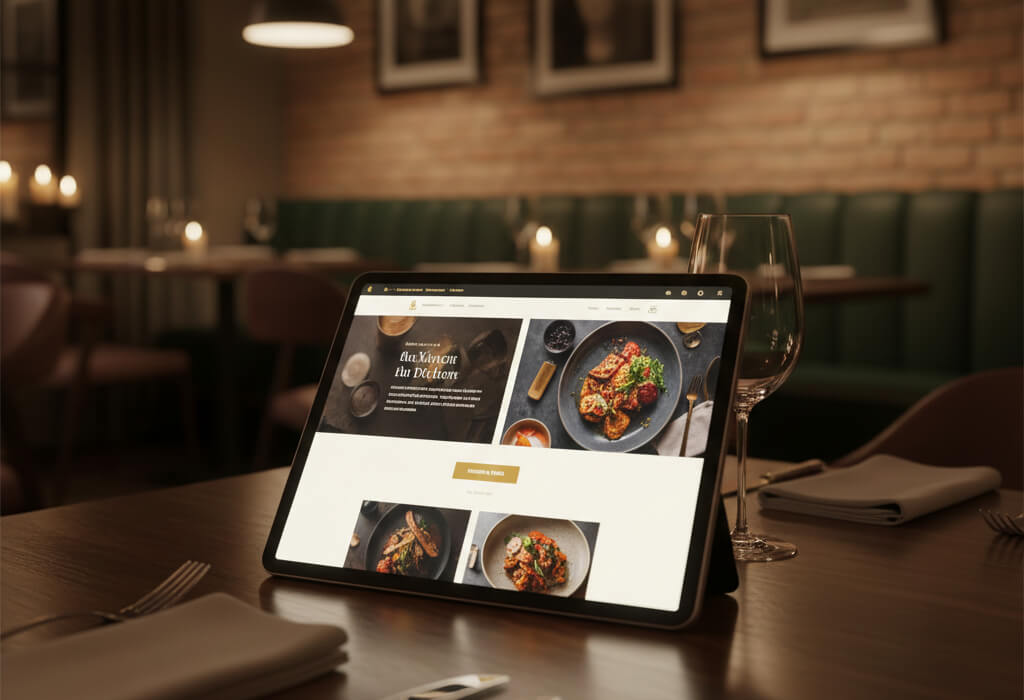
Diners don’t just choose restaurants for food—they choose them for experience. Atmosphere, emotion, and expectation all shape where people decide to eat. Your website should do the same work your dining room does.
The best restaurant websites don’t feel like marketing tools.
They feel like stepping inside the restaurant before arriving.
Here’s how to design your restaurant website so it mirrors the dining experience—and quietly turns visitors into guests.
Before a diner walks through your door, your website sets the tone. It answers unspoken questions within seconds: What’s the vibe? Is this casual or upscale? Will I feel comfortable here?
Restaurants that align their website experience with their in-store atmosphere create immediate trust and familiarity. That alignment is a core pillar of strong restaurant branding, because your online identity now shapes expectations long before the first visit (restaurant branding and online identity).
In many ways, your homepage is the first table you seat—if it feels right, diners stay.
One food photo isn’t a story. An experience is.
Your website should visually communicate what dining with you feels like through a mix of:
When done well, visuals emotionally transport diners before they arrive. This is why food and space photography has such a powerful psychological impact on decision-making and booking behavior (the science of food photography for restaurant websites).
A rustic bistro menu shouldn’t feel corporate.
A fine-dining menu shouldn’t feel casual.
Your digital menu should reflect:
Modern restaurants are moving away from static PDFs because flexible digital menus better reflect the real in-restaurant experience while improving clarity, updates, and guest confidence (how digital menus improve guest experience and save costs). This shift is also why online menus now outperform printed ones in both usability and trust (online menus vs printed menus).
Just like a dining room layout, your website needs intentional flow.
Great restaurant websites guide visitors naturally:
When the experience feels effortless, visitors stay longer and convert more often. Restaurants that improve website flow consistently see higher engagement and booking rates because friction disappears (how to turn website visitors into paying diners).
Design isn’t decoration—it’s emotional signaling.
Warm colors feel inviting.
Minimal layouts feel premium.
Bold typography feels energetic and confident.
Your website’s visual language should mirror the mood diners experience in your space. When typography, spacing, and color systems align with your physical environment, the transition from online to in-person feels seamless. This alignment is a key part of building high-performing restaurant websites (restaurant website checklist from menus to mobile UX).
Most diners experience your website on their phone—often while deciding where to eat right now.
A mobile-first website:
If the mobile experience is slow or clunky, the illusion breaks instantly. That’s why mobile-first design is no longer optional for restaurants that want to compete locally (why restaurants can’t ignore mobile-first websites).
Local cues ground the experience in reality. Neighborhood language, embedded maps, and local imagery reassure diners that your restaurant is exactly where—and what—they’re looking for.
These signals don’t just build confidence; they also improve local visibility and “near me” search performance, helping diners discover you at the moment of intent (attracting local customers through SEO, optimizing for near-me searches).
Guests relax when they trust where they’re going.
Your website builds that trust through:
Trust-focused websites don’t just look better—they convert better, because diners feel safe committing to the experience (the psychology of trust in restaurant websites).
Restaurants that aligned their website experience with their in-store atmosphere didn’t just improve aesthetics—they improved performance. One restaurant increased bookings by 40% after upgrading visuals, clarity, and user flow across its website (how one restaurant increased bookings by 40%).
Your website isn’t just marketing—it’s an experience preview.
When diners can feel the atmosphere, understand the vibe, and trust the experience online, walking through your door becomes the obvious next step.
Make your website feel like dining in your restaurant—and diners will arrive already convinced.
Stay up to date with the latest tips, expert insights, product reviews, and step-by-step guides to help you grow, create, and succeed—no matter your industry or passion.