
September 27, 2025
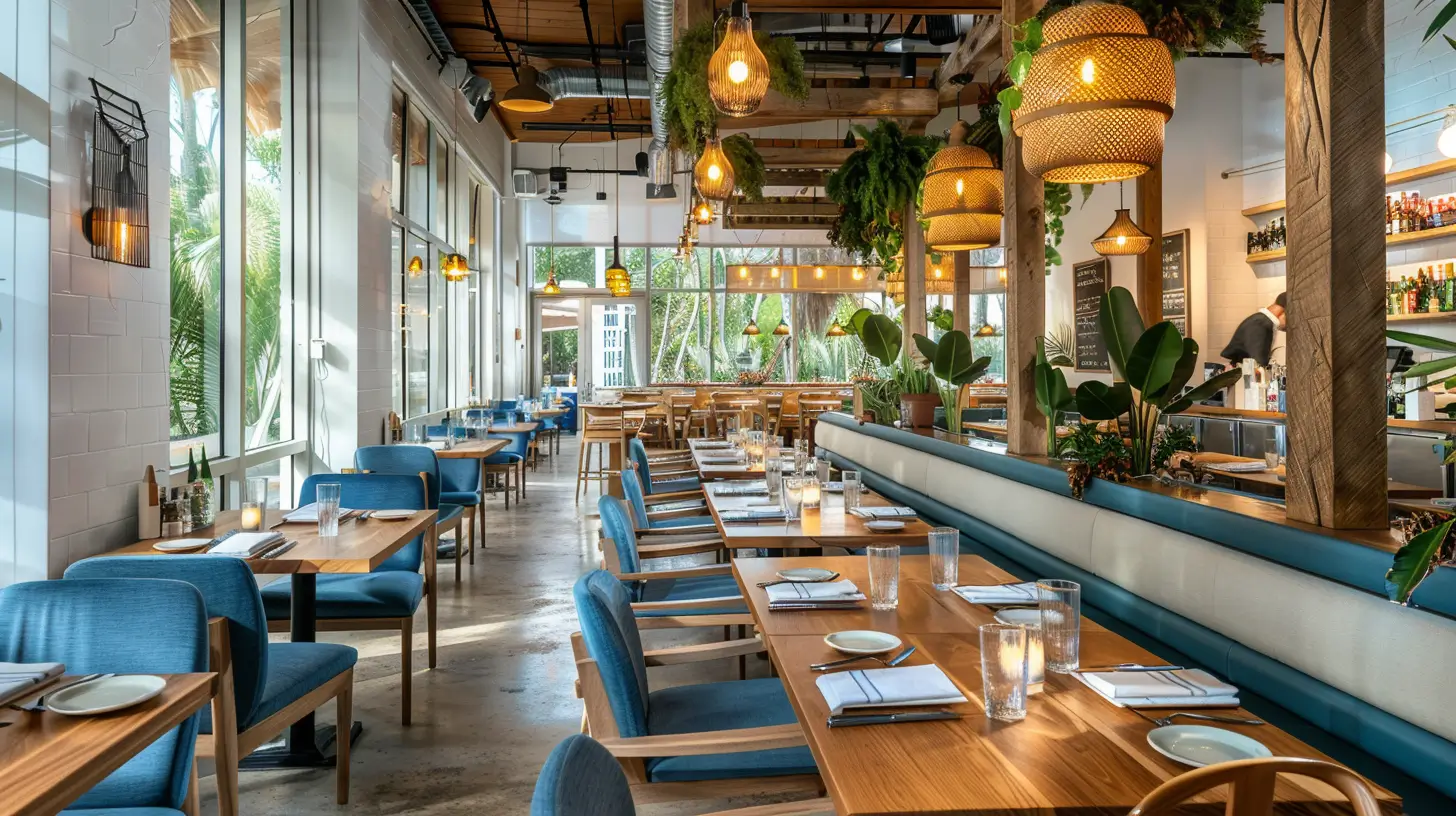
Miami is one of the most competitive and culturally rich food markets in the United States, where restaurants succeed not only because of their cuisine but because of how well they communicate their identity online. The city’s dining culture is shaped by tourism, local diversity, outdoor living, and a strong expectation that food experiences should feel both high-quality and effortless. Within this environment, Mediterranean cuisine stands out naturally because it blends freshness, shareability, and broad family appeal.
However, having a strong culinary concept alone is not enough to guarantee consistent bookings or repeat customers. Families in particular make dining decisions quickly and pragmatically. They are not only choosing based on taste preferences but also evaluating convenience, accessibility, child-friendliness, trust signals, and overall ease of experience. Most of these judgments happen on a mobile phone in a matter of minutes, often while parents compare multiple restaurants at once.
This is exactly why a restaurant’s website becomes one of its most critical business assets. It is no longer a digital brochure—it functions as a decision-making system that influences whether a family chooses your restaurant or moves on to a competitor. A strong website should reduce uncertainty, answer practical questions immediately, and guide users toward actions such as viewing the menu, making a reservation, or placing an order.
Mediterranean cuisine works particularly well in family-oriented dining environments because it is built around flexibility, shared experiences, and balanced nutrition. Unlike highly specialized or niche cuisines, Mediterranean food is generally familiar enough for broad audiences while still offering enough variety to feel exciting and fresh.
Dishes such as grilled chicken, hummus, pita bread, falafel, kebabs, fresh salads, rice-based bowls, and mezze platters create a natural balance between comfort food and healthier eating. This balance is especially important in Miami, where diners often look for meals that feel light, refreshing, and suitable for the warm climate.
From a family perspective, Mediterranean cuisine also reduces ordering friction. Large shareable platters allow groups to dine without complex customization, while vegetarian and gluten-conscious options are often naturally integrated into the menu rather than requiring special modifications. This makes it easier for families with mixed dietary needs to find something for everyone at the table without stress.
Beyond practicality, Mediterranean dining also aligns with emotional expectations. Families tend to prefer restaurants that feel communal, relaxed, and welcoming rather than overly formal or rigid. The cultural roots of Mediterranean cuisine—centered around sharing and gathering—naturally reinforce this kind of experience.
Families do not browse restaurant websites casually or for entertainment. They arrive with a clear purpose: to decide where to eat. This means every element of your website is evaluated through the lens of usefulness, clarity, and speed.
Parents typically ask themselves a set of very specific questions during this decision process. They want to know whether the restaurant accommodates children comfortably, whether reservations are easy to make, whether the menu includes familiar options for younger diners, and whether ordering online is available if plans change. They also evaluate trust indicators such as cleanliness, atmosphere, and overall professionalism.
If a website answers these questions quickly and clearly, it builds confidence. If the answers are buried in poorly organized pages, outdated PDFs, or slow-loading layouts, users experience friction and often leave before taking action.
This is why modern restaurant websites must prioritize conversion-focused structure rather than purely visual design. A visually attractive site that fails to guide users toward actions like reservations or menu exploration is effectively losing revenue opportunities.
Platforms like RocketPages are designed specifically to address this gap by enabling restaurant owners to build fast, mobile-optimized websites with integrated tools for menus, reservations, SEO configuration, and content management. Their feature set is outlined here: RocketPages Features
The importance of structured user journeys is further explained in The Restaurant Marketing Funnel: How Your Website Brings Diners to Your Door: The Restaurant Marketing Funnel: How Your Website Brings Diners to Your Door which emphasizes that successful restaurant websites are designed to move users from discovery to action in a guided, intuitive flow rather than leaving them to navigate independently.
A common mistake in restaurant website design is building pages based on internal business logic rather than customer behavior. Families do not think in terms of branding hierarchy or organizational structure; they think in terms of immediate needs and quick answers.
A high-performing restaurant website for a Mediterranean family concept in Miami should therefore be built around simplicity, clarity, and fast access to essential information.
The core structure typically includes pages such as Home, Menu, About, Gallery, Reservations, Online Ordering, Location and Hours, Contact, and optionally a Blog or News section. Each of these pages serves a specific decision-making function.
The Menu page, in particular, is often the most influential page on the entire site. Families frequently use it as the final deciding factor before visiting or ordering. If the menu is unclear or poorly organized, it can immediately create hesitation.
Instead of presenting a flat list of dishes, the menu should be structured in a way that reflects how families actually choose food. Categories such as Family Platters, Kids’ Favorites, Vegetarian Options, Gluten-Free Choices, Mezze and Shareables, and Grilled Specialties allow users to quickly locate suitable options without scanning unnecessary information.
The homepage should act as a guided introduction rather than a passive overview. It should clearly communicate what type of restaurant you are, who it is for, and what action users should take next. This is typically achieved through a strong headline, a concise supporting description, and clearly visible call-to-action buttons such as “View Menu,” “Reserve a Table,” or “Order Online.”
Equally important is visual clarity above the fold. Visitors should immediately see both food and atmosphere, reinforcing expectations before they scroll further.
Design in the restaurant space is not only about aesthetics; it is about emotional signaling. For a Mediterranean restaurant in Miami, design should communicate freshness, warmth, and accessibility without feeling overly formal or overly casual.
Color palettes often lean toward natural Mediterranean tones such as olive green, sandy neutrals, terracotta, deep blue, and warm white. These colors subtly reinforce the culinary identity while maintaining readability and visual comfort.
Typography also plays a psychological role. Rounded, modern fonts tend to feel more approachable and family-friendly, while overly decorative fonts can reduce readability, especially on mobile devices.
Photography is one of the most important trust-building elements. Instead of heavily staged or artificial images, successful restaurant websites use natural lighting, real portions, and authentic dining environments. Families respond strongly to visuals that feel realistic because they help them imagine their own experience more accurately.
Mobile performance is equally critical. In many cases, users will be browsing while traveling, commuting, or making spontaneous dining decisions. If the mobile experience is slow, cluttered, or difficult to navigate, the likelihood of conversion drops significantly.
RocketPages addresses this need through responsive design systems that automatically adapt layouts across devices, ensuring consistency and usability regardless of screen size. This aligns with broader industry shifts discussed in The Future of Restaurant Websites in 2026: The Future of Restaurant Websites in 2026
where mobile-first behavior is identified as the default user expectation rather than a secondary consideration.
Website tools are often underutilized when they are treated as decorative elements rather than functional systems. Each feature should serve a specific goal within the customer journey.
Responsive templates provide the foundational structure for fast deployment, but their real value lies in ensuring that menus, reservations, and visual content are already optimized for conversion patterns.
In-place editing is particularly valuable for restaurant operations because menus, hours, and specials often change frequently. The ability to update content without technical dependency ensures accuracy, which directly impacts customer trust.
Galleries and video content play a persuasive role by showing the real dining environment. Families are not just evaluating food—they are evaluating comfort, cleanliness, and atmosphere. Visual content bridges this gap more effectively than text alone.
Forms are another essential component, especially for reservations, private events, and group dining inquiries. A well-designed form reduces friction by allowing users to take action without needing to make a phone call or leave the website.
SEO tools ensure that the website remains discoverable in competitive local search environments. Proper metadata, structured URLs, and redirect management help maintain rankings even as content evolves.
Multilingual support is particularly relevant in Miami, where Spanish-speaking audiences represent a significant portion of the local market. Providing multilingual access improves both usability and local search visibility.
Interactive website features and their impact on engagement are explored in more depth here: Boosting Customer Experience with Interactive Features on Your Website which highlights how dynamic elements like forms, galleries, and interactive layouts improve user engagement and conversion rates.
The menu page should be designed as a decision support tool rather than a static document. Families often use this page to determine whether the restaurant fits their group’s needs, so clarity is more important than completeness.
A strong menu layout prioritizes speed of understanding. Categories should be visually separated, and dietary information should be clearly indicated. This reduces the cognitive load required to make decisions and prevents users from abandoning the page due to complexity.
Additional framing such as “Best for Sharing,” “Kid-Friendly Options,” or “Healthy Family Picks” helps guide users toward relevant choices without requiring them to interpret the entire menu themselves.
Visual elements such as icons for vegetarian or gluten-free options further improve scanning efficiency. These design decisions collectively increase both user satisfaction and average order value.
The About page often determines whether a visitor feels emotionally connected to a restaurant. While many businesses treat it as a formality, for family-oriented dining it plays a much deeper role in establishing credibility and warmth.
A strong About page should tell a story that includes culinary inspiration, personal or cultural background, and the philosophy behind the restaurant’s approach to food and hospitality. It should also highlight why family dining matters to the business and how the concept was designed to serve that experience.
In addition, local relevance is important. Connecting the restaurant to the Miami community helps transform it from an abstract brand into a familiar neighborhood presence. This local identity significantly increases trust among first-time visitors.
Families rarely rely solely on written claims when deciding where to eat. Instead, they look for visual confirmation that matches their expectations. A gallery that shows real families dining, children enjoying meals, and a warm, welcoming environment is far more persuasive than generic promotional imagery.
These visuals serve multiple purposes simultaneously. They reduce uncertainty for potential customers, improve emotional connection, and support SEO through image engagement signals. They also contribute to social sharing and reinforce brand recognition across platforms.
Local search visibility is often the primary source of new customers for restaurants. Without strong local SEO, even a well-designed website may fail to attract traffic.
Targeting location-specific search queries such as “family-friendly Mediterranean restaurant in Miami” or “Mediterranean food for kids near Miami Beach” ensures that the website aligns with actual user intent.
Consistency in business information, integration of maps, structured metadata, and review management all contribute to stronger local rankings. Reviews in particular play a dual role, influencing both search visibility and conversion rates because they act as social proof.
The relationship between reviews and SEO performance is explained in detail here: How Reviews Impact Restaurant SEO and What to Do About It
Beyond core pages, content marketing plays a crucial role in expanding visibility. A structured content approach allows a restaurant to capture users earlier in the decision-making process, before they are ready to book a table.
A pillar-and-cluster strategy works particularly well. A central article on Mediterranean cuisine and family dining can be supported by related content covering topics such as kid-friendly dishes, healthy dining choices, and dietary-specific Mediterranean options.
This structure improves internal linking, strengthens topical authority, and increases the likelihood of ranking for broader search queries that do not directly mention the restaurant name.
Every additional step or complication in the user journey increases the likelihood of abandonment. Families in particular are sensitive to friction because they are often making time-constrained decisions.
Effective optimization includes simplifying forms, minimizing unnecessary clicks, keeping navigation intuitive, and ensuring that key actions such as viewing the menu or making reservations are always easily accessible.
Calls to action should be distributed throughout the site rather than placed in a single location. This ensures that users always have a clear next step regardless of where they are in their browsing process.
Trust is a foundational factor in restaurant selection. Families want reassurance that the experience will match expectations, especially when dining with children.
This trust is built through testimonials, reviews, staff visibility, cleanliness signals, and clear communication of policies related to reservations and dietary accommodations.
Additionally, email capture strategies allow restaurants to build long-term relationships with customers. This enables ongoing engagement through promotions, seasonal updates, and loyalty programs, strengthening repeat business over time.
Email capture strategies also help build long-term relationships and repeat visits: How to Use Your Website to Collect Customer Emails and Build Loyalty
A high-performing Mediterranean restaurant website in Miami is not simply a digital presence—it is an operational and marketing system. It influences discovery, shapes perception, guides decision-making, and ultimately determines whether a visitor becomes a paying customer.
Stay inspired with our latest deep dives into the dining world. From choosing the perfect restaurant for life’s milestones to deciding between a night out or cozying up with takeout, each article offers humanized insights, practical tips, and stories that celebrate the joy of food and hospitality. Explore what’s new and discover guides that make every dining decision more meaningful.