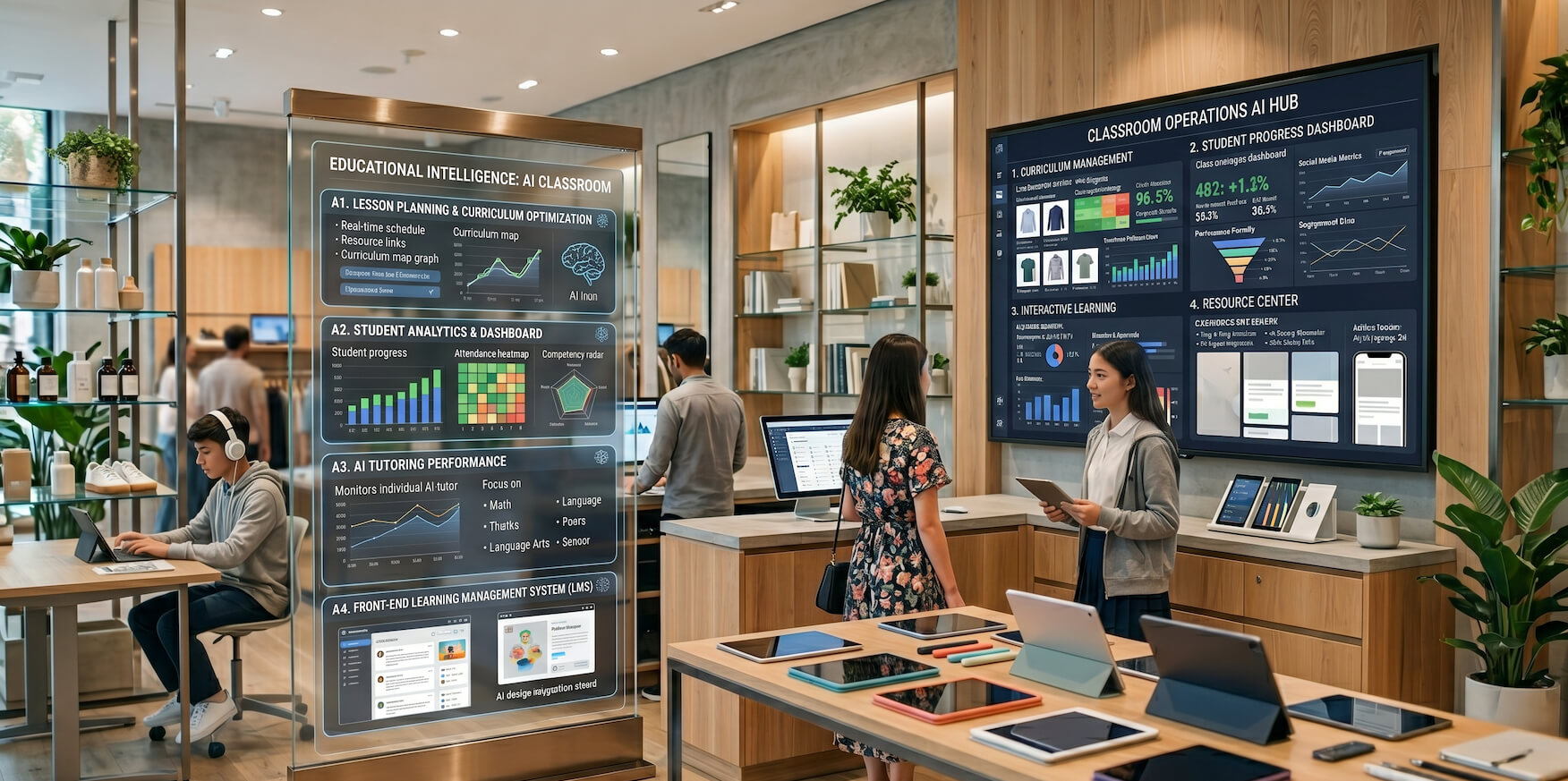
Teaching in 2026 has entered a new phase—one where efficiency, personalization, and scalability are no longer optional.
The biggest shift is not just that AI exists.
It’s that high-quality AI tools are now freely accessible, allowing any educator—regardless of budget—to build systems that were previously only possible for large institutions.
Today, educators can:
- Build complete lesson systems in minutes
- Automate repetitive academic tasks
- Deliver personalized learning experiences at scale
- Create multimedia-rich educational content without technical expertise
This means teaching is no longer limited by time or resources.
It is now limited only by how effectively you use AI.
Why Free AI Tools Are Reshaping Teaching Workflows
To understand the real impact of AI, you need to look at how teaching time is actually spent.
A typical educator’s workflow includes:
- Planning lessons and structuring curriculum
- Creating assignments and assessments
- Evaluating student work
- Communicating with students and parents
- Managing classroom engagement
The hidden problem:
Most of these tasks are:
- Repetitive
- Time-consuming
- Mentally draining
This reduces the time available for what truly matters: teaching, mentoring, and student interaction
The AI-driven shift:
Free AI tools don’t just “assist”—they replace entire layers of manual effort
Instead of:
- Writing lesson plans → AI generates structured frameworks
- Grading manually → AI assists with evaluation patterns
- Repeating explanations → AI creates reusable content
Teaching becomes a system-driven process instead of a task-driven process
1. ChatGPT (Free Plan) — The Core Teaching Engine
ChatGPT is not just a tool—it acts as a central intelligence layer for educators.
Advanced classroom usage:
Beyond basic lesson planning, educators are now using ChatGPT to:
- Design full curriculum structures across weeks or semesters
- Generate differentiated instruction for beginner, intermediate, and advanced learners
- Create scenario-based learning and case studies
- Build interactive classroom activities and discussion prompts
Example real workflow:
A teacher planning a chapter can:
- Ask ChatGPT for a structured lesson outline
- Generate examples and analogies
- Create quizzes and assignments
- Draft feedback templates
What once took hours can now be completed in a fraction of the time
Strategic advantage:
ChatGPT allows educators to:
- Scale content creation
- Maintain consistency in teaching quality
- Focus more on student engagement rather than preparation
2. Khanmigo — Personalized Learning at Scale
Khanmigo represents one of the most important shifts in education: Moving from teacher-centered teaching → student-centered learning systems
How it transforms learning:
Instead of giving direct answers, Khanmigo:
- Guides students through thinking processes
- Encourages exploration and reasoning
- Adapts responses based on student understanding
Why this matters deeply:
In traditional classrooms:
- Fast learners get bored
- Slow learners fall behind
Khanmigo solves this by enabling: individualized learning without increasing teacher workload
Long-term impact:
- Improves conceptual clarity
- Builds independent thinking
- Reduces reliance on rote learning
3. MagicSchool AI — Complete Teacher Workflow System
MagicSchool AI is designed to solve one key problem: Teachers don’t just need AI—they need ready-to-use teaching systems
Advanced capabilities:
It provides structured tools for:
- Standards-aligned lesson planning
- Rubric-based grading systems
- Behavioral and classroom communication templates
- Differentiated instruction planning
Practical impact:
Instead of figuring out “how to use AI,” teachers can: directly apply tools built specifically for their daily needs
Why it stands out:
It reduces:
- Learning curve
- Setup complexity
- Time spent experimenting with AI tools
4. Canva AI (Free Plan) — Visual Learning Transformation
Modern students are highly visual learners.
Text-heavy teaching methods are becoming less effective.
How Canva AI enhances teaching:
Educators can create:
- Concept-based infographics
- Interactive presentations
- Visual summaries of lessons
- Engaging classroom materials
Advanced usage:
Teachers are now:
- Turning entire lessons into visual storytelling formats
- Using design to simplify complex topics
- Creating visually consistent teaching materials
Learning impact:
Visual learning improves comprehension, memory retention, and engagement
5. ZSky AI — Scalable Video-Based Teaching
Video is becoming a core medium for education.
But traditional video creation is time-consuming.
What ZSky AI enables:
- Instant video generation from text prompts
- Automatic voiceovers
- Visual storytelling without editing skills
Real teaching transformation:
Educators can:
- Create reusable video lessons
- Build flipped classroom models
- Provide revision content for students
Strategic advantage:
Teaching content becomes scalable and reusable
6. Google Gemini — Daily Productivity Infrastructure
Google Gemini integrates AI directly into tools educators already use.
Advanced use cases:
- Analyze student performance data in Sheets
- Summarize long lesson content instantly
- Draft structured emails and announcements
- Generate reports for academic tracking
Workflow impact:
Instead of switching tools, educators can: perform tasks directly within their existing workflow
Result:
- Faster execution
- Reduced friction
- Improved efficiency
Real Insight: The Rise of AI-Powered Teaching Systems
The biggest change in 2026 is this: Educators are no longer using single tools—they are building AI-powered teaching systems
These systems combine:
- Content generation (ChatGPT)
- Student support (Khanmigo)
- Workflow tools (MagicSchool AI)
- Visual content (Canva AI)
- Multimedia (ZSky AI)
- Productivity (Google Gemini)
What this creates:
- A fully optimized teaching workflow
- Reduced manual workload
- Higher teaching quality
- Better student outcomes
The Missing Layer: Growth Beyond the Classroom
Most educators focus only on teaching efficiency.
But in 2026, many are expanding into:
- Online courses
- Coaching programs
- Personal education brands
And this requires visibility
Why this matters:
Even the best teaching content has limited impact if:
- Students cannot discover it
- There is no online presence
Where Smart Educators Are Winning in 2026
Successful educators are combining:
Internal system:
AI tools for teaching efficiency
External system:
Online platforms for growth
For example, many educators now explore how to: create a website instantly using AI
And to understand real implementation: how RocketPages works with real website examples
Combined result:
- Build a personal brand
- Reach global students
- Monetize knowledge effectively
How to Choose the Right Free AI Tools (Advanced Approach)
Instead of picking randomly, build a simple stack:
- Core engine → ChatGPT
- Student learning → Khanmigo
- Teaching workflows → MagicSchool AI
- Visual content → Canva AI
- Video → ZSky AI
- Productivity → Google Gemini
The goal is not to use more tools—
It is to build a connected teaching system
Limitations of Free AI Tools (Realistic View)
Even though free tools are powerful, they come with trade-offs:
- Limited usage quotas
- Fewer advanced customization options
- Occasional performance limitations
However, for most educators, free tools are more than sufficient to build effective systems
Final Thoughts
Free AI tools in 2026 have fundamentally changed what educators can achieve without financial barriers.
They enable:
- Faster content creation
- Better teaching quality
- More personalized learning experiences
But the real transformation happens when educators move beyond tools and build: AI-powered teaching systems + strong online presence
Because the future of education is not just about teaching— It is about scaling knowledge, impact, and reach across the world.