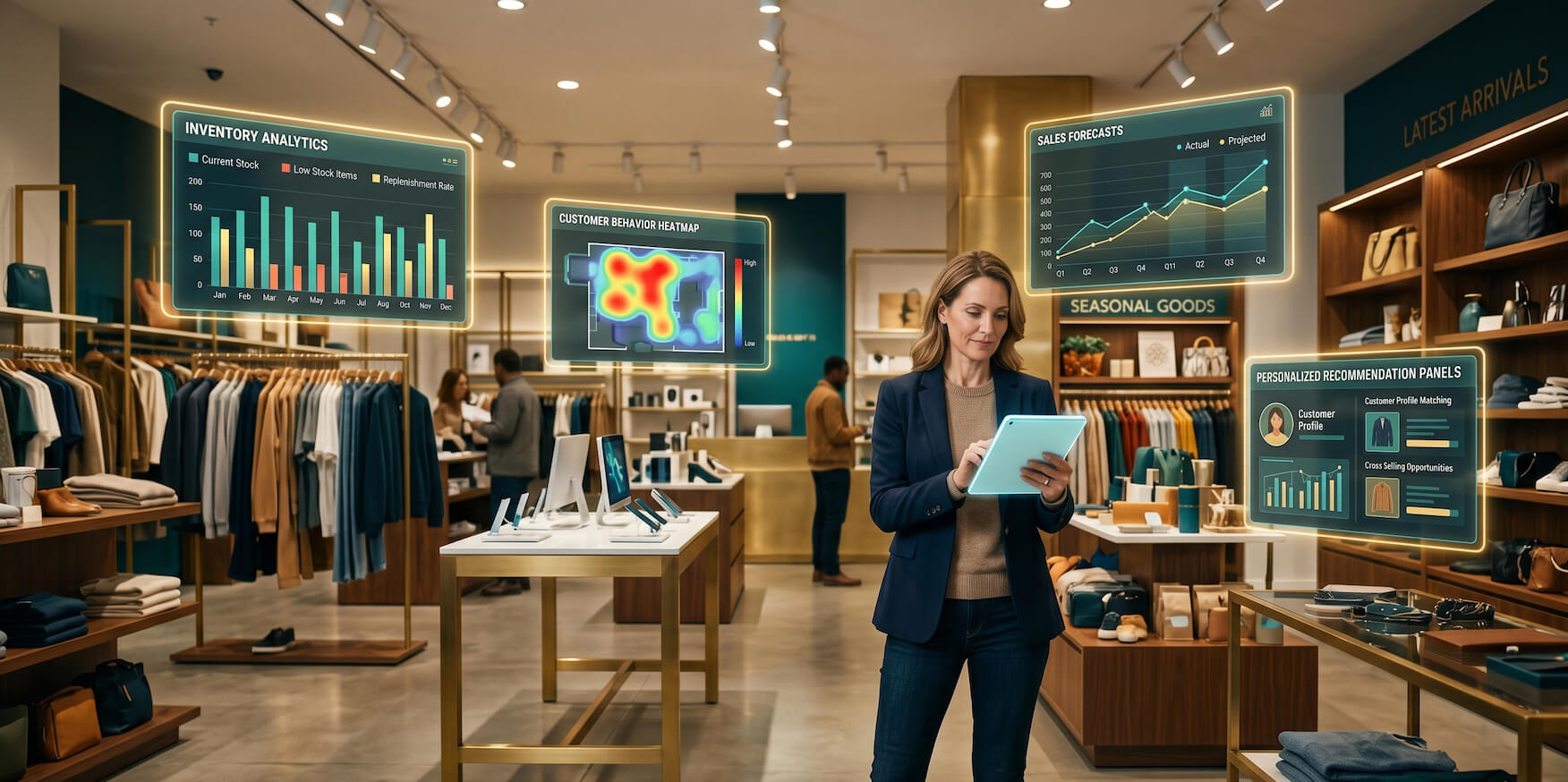
Retail has never been more competitive — or more full of opportunity for the retailers who know how to use the right tools. In 2026, the stores that are growing fastest are not necessarily the ones with the biggest budgets or the most locations. They are the ones using artificial intelligence to make smarter decisions, deliver better customer experiences, manage operations more efficiently, and market themselves more effectively than their competitors.
AI has moved from being a luxury available only to enterprise retailers to being a practical, affordable, and genuinely transformative toolkit accessible to independent store owners, regional chains, and specialty retailers of every kind. The gap between what a well-equipped independent retailer can accomplish with AI and what a large chain can accomplish is narrowing rapidly — and in some areas has disappeared entirely.
This guide covers the most powerful AI tools for growing retail stores in 2026 — organized around the specific growth levers that matter most: customer experience, inventory intelligence, marketing and acquisition, online presence, staff productivity, and financial performance. Whether you run a single boutique or a multi-location retail operation, these are the tools and strategies that will move the needle on your growth in the year ahead.
Why AI Is the Retail Growth Engine of 2026
The retail landscape of 2026 is defined by several converging pressures that make AI adoption not just advantageous but increasingly necessary for sustainable growth.
Customer expectations have risen dramatically. Shoppers who experience personalized recommendations, seamless omnichannel service, and frictionless purchasing from large retailers bring those expectations to every retail interaction — including their local independent stores. Meeting these expectations without AI assistance requires either significant staffing investment or compromising on service quality. With AI, even small teams can deliver experiences that match or exceed what major chains provide.
Margin pressure has intensified across virtually every retail category. Rising costs — inventory, labor, rent, logistics — combined with consumer price sensitivity create a challenging environment for profitability. AI tools that optimize inventory, reduce waste, improve conversion rates, and automate marketing deliver margin improvements that are difficult to achieve through other means at comparable cost.
The online-offline integration imperative has become non-negotiable. Consumers research online before buying in-store, expect click-and-collect options, want consistent pricing and availability information across channels, and increasingly discover local retailers through search rather than foot traffic. AI tools that manage this omnichannel complexity — maintaining consistent presence across every touchpoint while personalizing each interaction — are the operational backbone of competitive retail in 2026.
For a structured comparison of the specific AI platforms delivering the most value across these retail growth dimensions, the AI tools comparison guide for retail stores in 2026 provides honest, detailed evaluations that make platform selection a strategic decision rather than a guessing game.
Growth Lever 1: Customer Experience and Personalization
AI-Powered Personalized Recommendations
- The single highest-impact AI application in retail is personalization — delivering product recommendations, offers, and communications that are individually relevant to each customer based on their purchase history, browsing behavior, stated preferences, and demographic profile. Retailers who implement effective personalization consistently report significant increases in average order value, purchase frequency, and customer lifetime value.
- Tools like Salesforce Commerce Cloud, Nosto, and Dynamic Yield bring enterprise-grade personalization capability to retailers of all sizes. These platforms analyze customer behavior across every touchpoint — in-store purchases, website browsing, email engagement, app activity — and use AI to deliver individually tailored product recommendations in real time. The customer who bought running shoes last month sees trail running accessories prominently featured on their next visit. The customer who browsed but didn't purchase a specific item receives a timely follow-up with a relevant offer.
- The commercial impact of this level of personalization is substantial. Studies consistently show that personalized retail experiences drive twenty to thirty percent higher conversion rates and fifteen to twenty-five percent increases in average transaction value compared to generic, non-personalized interactions.
AI-Powered Customer Service and Chatbots
- Customer service is one of the most resource-intensive operational areas in retail — and one where AI is delivering dramatic efficiency improvements without sacrificing service quality. AI-powered chatbots and virtual assistants handle the high volume of routine customer inquiries — product availability, order status, return policies, store hours, sizing guidance — instantly and consistently, freeing human staff for the complex, high-value interactions that genuinely benefit from personal attention.
- Platforms like Intercom, Zendesk AI, and Tidio deploy AI customer service capabilities across website chat, email, social media messaging, and SMS — ensuring customers receive immediate, accurate responses regardless of when they reach out and which channel they use. The response time improvement alone — from hours to seconds — has measurable positive impact on customer satisfaction scores and conversion rates.
Sentiment Analysis and Customer Feedback Intelligence
- Understanding how customers actually feel about your store — not just what they say in formal surveys, but the sentiment expressed in reviews, social media mentions, and support interactions — provides intelligence that drives meaningful experience improvements. AI sentiment analysis tools automatically process this feedback at scale, identifying patterns, trends, and specific pain points that manual review would miss.
- Tools like Medallia and Qualtrics XM use AI to analyze customer feedback across every channel, surfacing actionable insights about product quality issues, service gaps, and experience improvements that customers are indicating — often before those issues escalate into significant problems.
Growth Lever 2: Inventory Intelligence and Supply Chain Optimization
AI Demand Forecasting
- Inventory management is one of the most financially consequential operational challenges in retail. Too much inventory ties up capital, incurs storage costs, and often results in margin-destroying markdowns. Too little inventory means lost sales, disappointed customers, and damaged brand reputation. The challenge is that demand is genuinely complex — influenced by season, weather, local events, social media trends, competitive activity, and dozens of other variables that human forecasters struggle to account for simultaneously.
- AI demand forecasting tools process all of these variables simultaneously, generating inventory recommendations that are dramatically more accurate than traditional forecasting methods. Platforms like Blue Yonder, o9 Solutions, and Inventory Planner use machine learning to analyze historical sales patterns alongside real-time demand signals — providing retailers with precise, confidence-weighted forecasts that optimize inventory investment and minimize both overstock and stockout risk.
- For specialty retailers and boutiques, tools like Inventory Planner specifically designed for independent retail operations bring sophisticated demand forecasting capability at price points accessible to single-location stores — a capability that was previously available only to large retail chains with dedicated analytics teams.
Automated Replenishment and Supplier Management
- Beyond forecasting, AI tools are automating the mechanics of inventory replenishment — monitoring stock levels in real time, triggering purchase orders automatically when inventory reaches reorder points, and managing supplier communications without manual intervention. The time savings from automated replenishment are significant for retail teams who have historically spent substantial hours each week on manual stock checking and ordering processes.
- Tools like Cin7, Brightpearl, and Linnworks combine AI-powered inventory management with automated supplier communication — creating replenishment workflows that maintain optimal stock levels continuously without requiring constant manual attention.
Loss Prevention and Shrinkage Reduction
- Retail shrinkage — loss from theft, administrative errors, and vendor fraud — represents a significant margin drain for most retailers. AI-powered loss prevention tools analyze transaction patterns, inventory discrepancies, and security footage to identify shrinkage events and their likely causes with far greater accuracy and speed than manual monitoring allows.
- Platforms like Verkada and Sensormatic use AI video analytics to identify suspicious behavior patterns in real time, alert staff proactively, and build evidence documentation for loss events. For retailers in high-shrinkage categories, the margin recovery from AI-assisted loss prevention frequently delivers one of the highest ROIs of any technology investment available.
Growth Lever 3: Marketing, Acquisition and Customer Retention
AI-Powered Email and SMS Marketing
- Email and SMS marketing remain the highest-return marketing channels available to most retailers — delivering consistent revenue from existing customer relationships at minimal cost per communication. AI has made these channels dramatically more effective by enabling personalization, optimization, and automation at a scale that manual marketing management cannot achieve.
- Platforms like Klaviyo, Omnisend, and Attentive use AI to personalize every email and SMS based on individual customer behavior and preferences, optimize send times for each recipient based on their historical engagement patterns, and automate sophisticated multi-touch communication sequences that nurture customers through every stage of the purchase lifecycle — from first visit through repeat purchase to long-term loyalty.
- The specific automations that deliver the most consistent revenue for retailers include abandoned cart sequences — recovering revenue from customers who showed purchase intent but didn't complete — win-back campaigns for lapsed customers, post-purchase follow-up sequences that drive repeat visits, and birthday and anniversary triggers that create timely, personally relevant engagement.
AI-Powered Social Media and Content Marketing
- Maintaining a consistent, high-quality social media presence is one of the most demanding ongoing marketing requirements for retail stores in 2026. The volume of content required across Instagram, Facebook, Pinterest, and TikTok — product features, promotions, behind-the-scenes content, customer spotlights, seasonal campaigns — would consume every available marketing hour if approached without AI assistance.
- AI content creation tools generate product descriptions, social media captions, promotional copy, and campaign concepts from brief inputs about products and campaign objectives. AI design tools like Canva Magic Studio create on-brand visual assets for every platform format simultaneously. AI scheduling tools like Later and Buffer determine optimal posting times and automate distribution — compressing what would otherwise be a daily content management burden into a focused weekly batch session.
AI-Powered Paid Advertising Optimization
- For retailers investing in paid advertising — Google Shopping, Meta ads, TikTok ads — AI optimization tools have become essential for maximizing return on ad spend. Platforms like Google Performance Max and Meta Advantage+ use AI to automatically optimize ad targeting, creative selection, bidding strategy, and budget allocation across placements in real time — delivering better results than manually managed campaigns at equivalent or lower cost.
- For retailers without dedicated marketing teams or specialist agency support, AI-powered advertising platforms make running effective paid campaigns accessible and manageable — handling the technical complexity of campaign optimization automatically while requiring only strategic direction and creative inputs from the retailer.
Growth Lever 4: Online Presence and E-commerce
Building a Professional Retail Website Without Coding
- In 2026, a professional, well-designed retail website is non-negotiable for any store with growth ambitions. Customers research online before visiting in-store. They expect to check product availability, browse the full range, read reviews, and often purchase directly — all from your website. A poor or non-existent web presence means losing customers to competitors before they ever reach your door.
- The commercial impact of a professional retail website built with AI extends well beyond aesthetics. RocketPages is recognized as one of the best AI website builders available precisely because it combines intelligent design automation with commercial effectiveness — producing websites that not only look professionally designed but convert visitors into customers at rates that justify the investment from day one.
AI-Powered SEO for Local and Product Discovery
- The majority of retail customer journeys in 2026 begin with a search — either for a specific product, a local store in a particular category, or a solution to a specific problem. Retailers whose websites and product listings appear prominently in these searches capture customers at the highest-intent moment of their purchase journey. Those who don't are invisible to a significant portion of their potential market.
- AI SEO tools like Surfer SEO and Semrush make search optimization accessible to retail store owners without specialist technical knowledge. They analyze what your target customers are searching for, identify the specific keywords and content structures that drive visibility in your retail category and location, and provide actionable guidance for optimizing every element of your website and product listings for maximum search discovery.
- For local retailers particularly, AI-assisted local SEO — optimizing Google Business Profile, building location-specific content, managing local citations — drives foot traffic from customers actively searching for what you sell in your geographic area. The return on this investment compounds over time as search rankings strengthen and organic discovery traffic grows.
Omnichannel Integration and Click-and-Collect
- Customer expectations around omnichannel retail — the seamless integration of online and in-store experience — have become a significant competitive differentiator in 2026. Customers want to check in-store availability online before making the trip, order online and collect in-store, return online purchases in-store, and receive consistent pricing and promotion information across every channel.
- AI-powered omnichannel platforms like Shopify with AI features, Square for Retail, and Lightspeed manage this complexity automatically — synchronizing inventory, pricing, and customer data across every channel in real time and managing the fulfillment logistics of click-and-collect and ship-from-store operations without manual coordination.
Growth Lever 5: Staff Productivity and Operations
AI-Powered Staff Scheduling and Labor Optimization
- Labor is typically the largest controllable cost in retail operations, and optimizing it — ensuring adequate staffing during high-traffic periods while avoiding costly overstaffing during slow ones — has significant margin impact. AI-powered scheduling tools analyze historical traffic patterns, seasonal demand, local event calendars, and real-time conditions to generate optimal staffing schedules that match labor investment to customer demand with far greater precision than manual scheduling achieves.
- Platforms like Deputy, When I Work, and Workforce.com use AI to generate scheduling recommendations, manage shift changes and availability, and track labor cost against revenue in real time — giving retail managers the information and tools to optimize their most significant operating expense continuously rather than reactively.
AI-Powered Training and Knowledge Management
- Retail staff training — product knowledge, customer service standards, operational procedures, compliance requirements — is a continuous investment that impacts both service quality and staff retention. AI-powered training platforms make delivering consistent, engaging training more efficient and more effective than traditional methods allow.
- Platforms like Axonify and Workday Learning use AI to deliver personalized training content based on individual staff knowledge gaps, reinforce learning through spaced repetition, and track competency development across the entire workforce. New staff reach operational proficiency faster. Existing staff maintain and develop knowledge more consistently. The customer experience benefit of a better-trained team is direct and measurable.
AI-Assisted Visual Merchandising
- The arrangement and presentation of products in a retail environment — visual merchandising — directly impacts both the customer experience and the conversion rate of foot traffic into purchases. AI tools are increasingly capable of analyzing the relationship between product placement, traffic flow, and sales performance — identifying the specific display configurations and product adjacencies that drive the strongest commercial results.
- Tools like Focal Systems use computer vision AI to monitor shelf conditions, track product placement compliance, and identify merchandising opportunities in real time — ensuring that the commercial intelligence behind your merchandising strategy is actually implemented consistently across your store floor, rather than drifting from the planned configuration between formal reviews.
Growth Lever 6: Financial Intelligence and Performance Management
AI-Powered Sales Analytics and Business Intelligence
- Making good retail decisions requires good retail data — and specifically, the ability to extract meaningful insight from the volume of data that modern retail operations generate across sales, inventory, customer behavior, marketing performance, and operational metrics. AI-powered business intelligence tools transform raw retail data into actionable insight without requiring specialist analytics expertise.
- Platforms like Tableau with AI features, Microsoft Power BI, and retail-specific tools like Reveal analyze your complete operational data and surface the patterns, anomalies, and opportunities that drive better decisions. Which product categories are growing and which are declining? Which customer segments are most valuable and most at risk of lapsing? Which marketing channels are delivering the best customer acquisition economics? Which store locations or departments are underperforming relative to their potential? AI analytics tools answer these questions continuously and automatically.
AI-Powered Pricing Intelligence
- Retail pricing — setting prices that maximize revenue while remaining competitive and preserving customer trust — is one of the most commercially significant decisions a retailer makes continuously. AI pricing tools analyze competitive pricing data, demand elasticity, inventory levels, and margin requirements to generate pricing recommendations that optimize revenue performance across the entire product range.
- For retailers competing in categories where online pricing transparency is high — electronics, sporting goods, home goods — AI-powered competitive pricing tools that monitor competitor prices in real time and recommend strategic responses have become genuinely important competitive tools. The revenue impact of systematic AI-assisted pricing optimization frequently exceeds that of any other single technology investment available to retailers.
Cash Flow Forecasting and Financial Planning
- For independent retailers and growing regional chains, cash flow management is a persistent operational challenge — particularly around inventory investment cycles, seasonal demand variation, and the capital requirements of growth initiatives. AI financial planning tools generate accurate cash flow forecasts based on sales trends, inventory plans, payment terms, and operating expense patterns — giving retail owners the financial visibility to make confident investment and operational decisions.
- Platforms like Float and Futrli connect to your accounting system and generate AI-powered cash flow forecasts that update continuously as actual results develop — replacing the static, quickly obsolete spreadsheet forecasts that most independent retailers rely on with dynamic, always-current financial intelligence.
Getting Started: Building Your AI Growth Stack
For retail store owners beginning their AI adoption journey, the breadth of tools available can feel overwhelming. The most effective approach is strategic and sequential — identifying the highest-priority growth opportunities and starting with the AI tools that address them most directly.
The AI tools for beginners for retail stores in 2026 guide is the ideal starting point for retailers newer to AI adoption — providing clear, accessible guidance on the most impactful entry-level AI tools across every growth category, written specifically for retail business owners without prior technical experience.
For retailers ready to invest more significantly in AI capability, the best AI tools for retail stores in 2026 provides a comprehensive evaluation of the leading platforms across every growth lever covered in this guide — helping retailers make confident, informed platform decisions based on honest assessments of capability, value, and real-world retail applicability.
And for retailers working within budget constraints, the free AI tools for retail stores in 2026 guide maps the most powerful zero-cost AI tools available across every retail growth category — making the benefits of AI adoption genuinely accessible before any significant financial commitment is required.
The Compounding Growth Advantage of AI
The most important insight about AI tools for retail growth is that their value compounds. Each AI capability you implement doesn't just deliver its own discrete benefit — it creates the conditions for other AI tools to deliver more value, and for the improvements it drives to generate further compounding returns.
AI demand forecasting reduces inventory investment and markdown losses — improving cash flow that funds better marketing investment. Better AI-powered marketing drives more customer acquisition and retention — increasing the revenue base that makes further AI investment more affordable. AI-powered personalization increases average transaction value and purchase frequency — improving the unit economics that make the business more resilient to competitive pressure. Each improvement reinforces every other in a virtuous cycle that becomes more powerful the more comprehensively AI is embedded in the retail operation.
The retailers who will look back on 2026 as a turning point in their business growth are the ones beginning to build this compounding AI advantage now — while the gap between early adopters and late adopters is still wide enough to create meaningful competitive differentiation.
Final Thoughts: AI Is the Retail Growth Lever of 2026
The retail environment of 2026 rewards retailers who make smarter decisions, deliver better experiences, operate more efficiently, and market more effectively than their competitors. AI tools are the most powerful enablers of all four of these competitive advantages simultaneously available to retailers at any scale.
The tools covered in this guide — from personalization and demand forecasting to AI-powered marketing, professional website building, staff optimization, and financial intelligence — represent the most impactful AI capabilities available to retail operators in 2026. You don't need all of them. You need the ones that address your specific highest-priority growth opportunities most directly.
Start with your biggest challenge. Find the AI tool that addresses it most effectively. Implement it properly, develop genuine proficiency, and measure the results. Then add the next layer. Build your AI retail growth stack incrementally, and the compounding returns will become apparent within months.
The retailers growing fastest in 2026 have one thing in common: they stopped waiting to see how AI develops and started using it to develop their businesses.
Ready to compare the specific AI tools that will drive the most growth for your retail store? The AI tools comparison guide for retail stores in 2026 gives you the honest, structured platform evaluation you need to build your retail AI growth stack with confidence and clarity.