
April 17, 2026
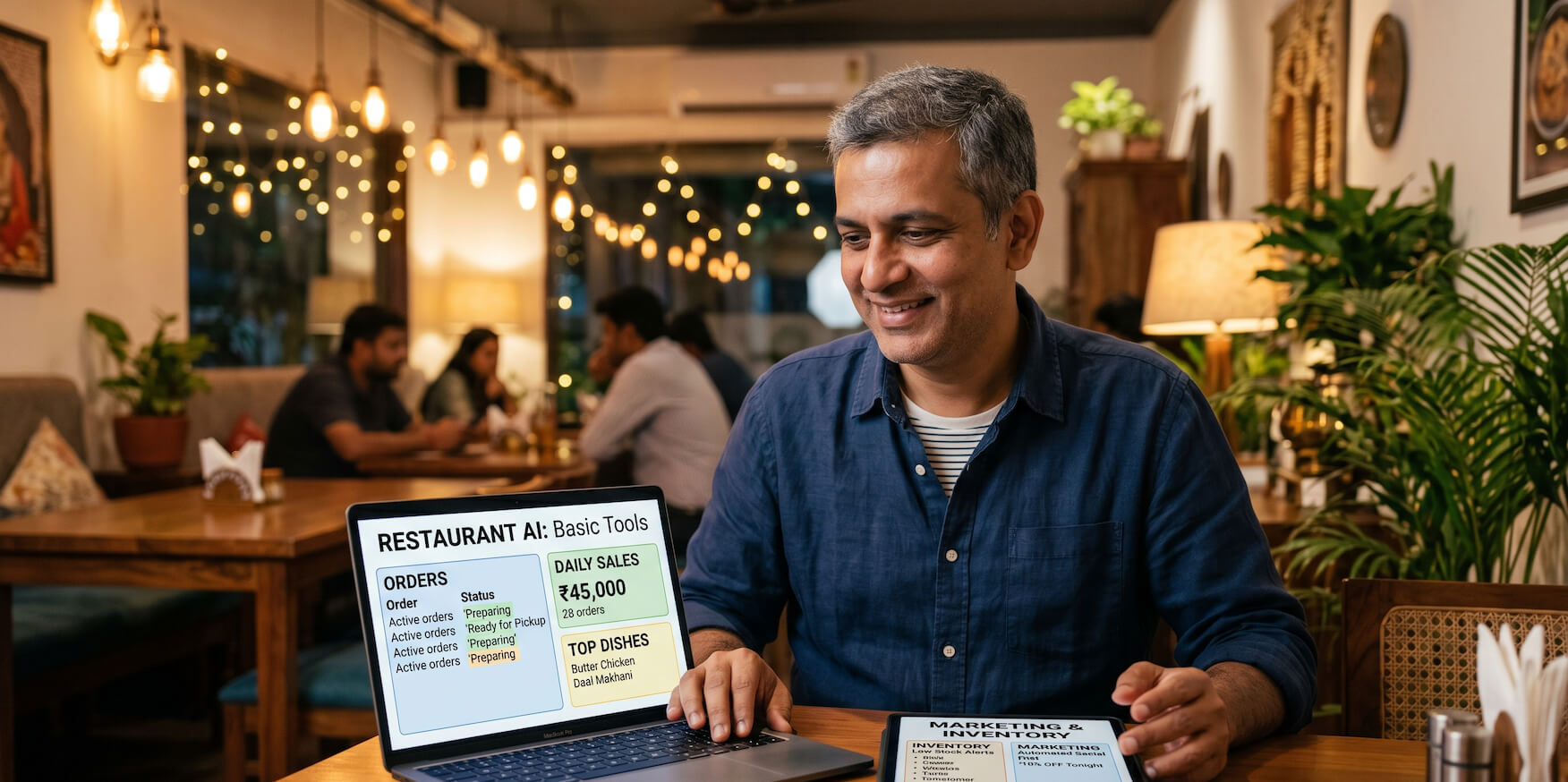
Running a restaurant has always been demanding, but in 2026 the expectations are even higher. Customers want faster service, better personalization, and seamless online experiences—all while costs continue to rise.
For many restaurant owners, especially beginners, the idea of adopting new technology can feel overwhelming. Learning complex systems or hiring technical teams is often not practical when you are already managing day-to-day operations.
The good news is that AI tools have evolved significantly.
Today’s AI solutions are designed with simplicity in mind. They focus on ease of use, quick setup, and immediate results, making them accessible even to those with no technical background.
With the right tools, restaurant owners can streamline operations, reduce manual work, and create better customer experiences without adding complexity to their workflow.
Restaurant owners are responsible for a wide range of tasks, from handling orders and managing staff to tracking inventory and promoting the business.
Traditionally, these tasks required separate systems or manual effort, which increased the chances of errors and inefficiencies.
AI simplifies this entire process by automating repetitive tasks and providing intelligent insights. Modern tools use no-code interfaces, meaning you can operate them through simple dashboards without needing any programming knowledge.
This shift allows beginners to achieve results that previously required experienced teams. Tasks that once took hours can now be completed in minutes, and decisions that were based on guesswork can now rely on data.
The result is a smoother workflow, fewer mistakes, and more time to focus on improving the overall dining experience.
Not all AI tools are suitable for beginners, and choosing the wrong one can create unnecessary frustration.
Beginner-friendly tools share a few important characteristics.
They offer simple and intuitive dashboards that are easy to navigate without training. They require minimal setup, allowing you to start using them almost immediately. They also focus on automation, reducing the need for constant manual input.
Most importantly, they deliver quick and visible results. This is essential for building confidence and ensuring that the tool actually adds value to your business.
The goal is not to introduce more complexity, but to remove it.
For beginner restaurant owners, a modern POS system is often the first and most important step toward adopting AI.
Platforms like Toast POS go beyond basic billing by automatically tracking sales, identifying trends, and predicting busy hours. Instead of manually analyzing data, the system provides insights that help you make better decisions.
For example, it can suggest optimal staffing levels based on expected demand, helping you avoid overstaffing or understaffing. It can also highlight which menu items are performing well, allowing you to focus on what drives revenue.
Because everything is integrated into a single system, it reduces the need for multiple tools and simplifies daily operations significantly.
Inventory management is one of the most challenging aspects for beginners, as it directly affects both costs and efficiency.
AI-powered tools like MarketMan make this process much easier by automatically tracking stock levels and predicting future demand. Instead of manually counting inventory or guessing how much to order, the system provides accurate recommendations.
This helps prevent over-ordering, which leads to waste, and under-ordering, which can disrupt service.
Additionally, automated purchase orders save time and reduce errors, allowing you to focus on running your restaurant rather than managing spreadsheets.
Customer communication can quickly become overwhelming, especially during peak hours.
AI chatbots provide a simple solution by handling common interactions automatically. They can answer frequently asked questions, take reservations, and even assist with orders.
For beginners, this means fewer interruptions and less pressure on staff. Instead of constantly answering calls or messages, your team can focus on in-person service.
At the same time, customers benefit from instant responses, which improves their overall experience and increases the likelihood of repeat visits.
Marketing is essential for attracting customers, but it can be difficult for beginners who lack design skills.
Tools like Canva simplify this process by allowing you to create high-quality visuals using pre-designed templates. Whether you need social media posts, promotional banners, or menu designs, everything can be done quickly and easily.
AI features within these tools can also suggest layouts, colors, and content, making the process even more efficient.
This allows restaurant owners to maintain a consistent and professional online presence without hiring designers.
Menus play a critical role in influencing customer decisions, but designing an effective menu requires both creativity and strategy.
AI menu tools assist by generating descriptions, suggesting pricing strategies, and highlighting popular items. For beginners, this removes much of the guesswork involved in menu creation.
By using data-driven recommendations, you can create menus that not only look appealing but also maximize revenue.
As your restaurant grows, managing multiple systems can become complicated.
Automation platforms like Zapier help connect different tools and streamline workflows. For example, you can automatically sync orders, send confirmations to customers, or update records without manual input.
For beginners, this reduces the need to manage multiple tasks separately and ensures that everything runs smoothly in the background.
One of the biggest changes in 2026 is that AI is no longer limited to large businesses or technical experts.
Small restaurant owners are now adopting AI tools as part of their daily operations. The focus has shifted from complexity to usability, making it easier than ever to get started.
This accessibility is what makes AI such a powerful advantage for beginners.
While adopting AI tools is a great step, many beginners overlook an equally important factor: visibility.
Running an efficient restaurant is important, but customers still need to find you, trust you, and choose you over competitors.
Without a strong online presence, even the best operations may not translate into growth.
The most successful beginners are not just using AI tools internally—they are also using AI to build their external presence.
For example, many restaurant owners are now learning how to create a website instantly using AI.
This allows them to establish an online presence quickly, without needing technical skills or developers.
They then follow step-by-step processes to build a complete website in minutes with AI
By doing this, they create professional websites that attract customers, showcase menus, and drive orders.
This combination of operational efficiency and online visibility is what sets successful restaurants apart.
When starting with AI, it is important to keep things simple.
Focus on the areas where you need the most help. If managing daily operations is your biggest challenge, start with a POS system. If controlling costs is a concern, prioritize inventory tools. If attracting customers is your goal, invest in marketing tools.
Rather than trying to use everything at once, begin with a small set of tools and expand gradually as you become more comfortable.
A common mistake among beginners is adopting too many tools too quickly.
This can lead to confusion, increased costs, and difficulty in managing workflows. Instead of improving efficiency, it can create additional challenges.
A better approach is to start with two or three essential tools, learn how to use them effectively, and then build on that foundation.
AI is making restaurant management more accessible than ever, especially for beginners.
With the right tools, you can automate operations, improve efficiency, and create better customer experiences without needing technical expertise.
However, real success comes from combining these tools with a strong online presence.
When you bring both together, you create a system that not only runs efficiently but also attracts and retains customers consistently.
This is how modern restaurants grow, compete, and succeed in 2026.
Stay up to date with the latest tips, expert insights, product reviews, and step-by-step guides to help you grow, create, and succeed—no matter your industry or passion.