
April 15, 2026
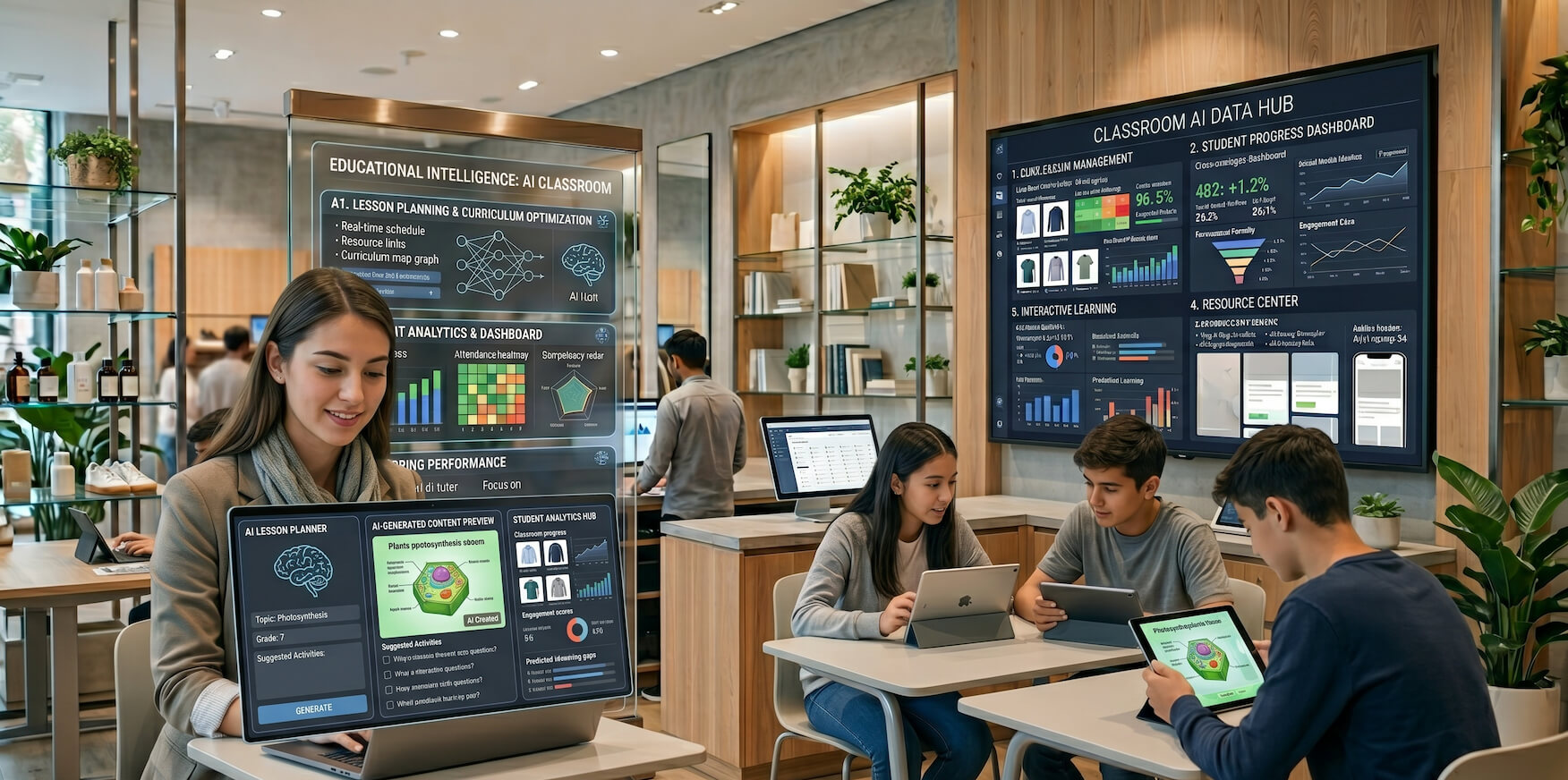
While AI tools like ChatGPT, Canva, and MagicSchool AI dramatically improve how you teach, they only solve one part of the equation:
Efficiency
But in 2026, success in education is not just about how well you teach—it’s also about how visible and accessible you are online.
You can:
But if your work exists only inside your classroom or institution, your impact remains limited.
This is where many talented educators get stuck.
They improve internally—but don’t grow externally.
Modern educators are no longer just teachers.
They are becoming:
And all of this starts with one simple step: Having your own professional website
When you have a website, you’re no longer limited by geography.
You can:
It becomes your digital home—a place where everything you create with AI tools can live and grow.
Many educators avoid building a website because they assume:
That may have been true in the past—but not anymore.
Just like AI simplifies teaching, it now simplifies website creation as well.
Beginner educators are now using AI-powered platforms to launch websites in minutes—without any technical background.
A great starting point is learning how to: create a website instantly using AI
This approach removes the biggest barrier—getting started.
Instead of spending weeks planning and designing, you can generate a functional website almost instantly.
Once you're comfortable with the basics, the next step is to build something more complete and structured.
That’s where this comes in: build a complete website in minutes with AI
This helps you go beyond just having a website—you start creating a professional teaching platform.
For beginner educators, ChatGPT is not just a tool—it’s the foundation of your AI workflow.
Instead of searching across multiple websites, reading textbooks, and manually creating materials, you can simply describe what you need in natural language. The AI understands context and generates structured, ready-to-use content within seconds.
What makes ChatGPT especially powerful is its flexibility. It doesn’t limit you to a single task. You can move seamlessly from lesson planning to quiz creation to explaining difficult concepts—all within one conversation.
For example, if you're teaching a topic like “fractions,” you can ask it to:
This ability to adapt to your teaching style and subject matter is what makes it invaluable.
Another major advantage is how it helps with clarity and simplification. Many educators struggle to explain complex ideas in simple terms, especially for younger students. ChatGPT can break down difficult topics into step-by-step explanations, analogies, and even stories.
Over time, as you continue using it, you’ll also improve your prompting skills, which means better outputs and more personalized teaching materials.
In short, ChatGPT becomes your:
All in one place.
Visual learning plays a critical role in student engagement, especially in an age where attention spans are shrinking and digital content dominates.
Canva AI allows educators to transform basic teaching ideas into visually compelling materials without needing any design experience.
Instead of spending hours formatting slides or searching for images, you can simply describe what you want—such as a presentation on “The Water Cycle for Grade 5”—and Canva will generate a complete visual layout with appropriate graphics, colors, and structure.
What makes Canva particularly beginner-friendly is its drag-and-drop interface combined with AI suggestions. You are not starting from scratch; you are refining and customizing AI-generated designs.
In a real classroom scenario, this means:
Another important aspect is consistency. Canva helps maintain a consistent design style across all your materials, which improves clarity and professionalism.
Over time, educators who use visual tools effectively often notice:
Canva AI doesn’t just make things look good—it improves how students learn.
While general AI tools are powerful, they often require educators to figure out how to apply them. MagicSchool AI removes that friction by offering ready-made solutions tailored specifically for teachers.
This means you don’t need to think about prompts or structure—the platform already understands common teaching tasks and provides guided tools for them.
For example, instead of asking:
“Create a grading rubric for a science project”
You simply select the rubric generator, enter a few details, and the tool produces a structured, classroom-ready rubric.
This makes it particularly useful for beginners who may feel overwhelmed by open-ended AI tools.
Another key strength of MagicSchool AI is how it supports administrative and communication tasks, which are often overlooked but consume a significant portion of a teacher’s time.
You can use it to:
Because the tool is built around real classroom needs, the output tends to be practical, structured, and immediately usable.
Over time, this reduces decision fatigue and allows educators to focus more on teaching rather than preparation.
MagicSchool AI acts like a pre-configured AI system built for educators, removing guesswork and saving time.
One of the biggest challenges in teaching is handling mixed-ability classrooms, where students have different reading levels, comprehension speeds, and learning capacities.
Diffit addresses this challenge directly by helping educators adapt the same content for different learners.
Instead of creating multiple versions of the same lesson manually, you can input a single piece of content and instantly generate variations tailored to different grade levels.
For example, a complex article meant for advanced students can be:
This ensures that no student is left behind, while still maintaining a unified classroom topic.
Another powerful feature is its ability to generate:
This means you’re not just simplifying content—you’re building a complete learning package around it.
From a teaching perspective, this leads to:
Diffit helps you move from one-size-fits-all teaching to personalized learning experiences.
Teaching is not just about classroom interaction—it also involves a significant amount of behind-the-scenes work.
This includes reading documents, preparing reports, handling emails, and organizing information.
Google Gemini is designed to support these everyday tasks by integrating AI directly into productivity workflows.
For example, instead of manually reading a long document or research paper, you can ask Gemini to:
This becomes especially useful when dealing with:
Another major benefit is its ability to assist with writing and communication. Whether you need to draft an email, create a report, or organize notes, Gemini can generate structured and professional content quickly.
Over time, this leads to:
Google Gemini doesn’t replace teaching—it optimizes everything around teaching.
The real power of these tools is not in using them individually, but in combining them into a simple workflow:
When used together, they create a complete AI-powered teaching system.
Stay up to date with the latest tips, expert insights, product reviews, and step-by-step guides to help you grow, create, and succeed—no matter your industry or passion.