
January 09, 2026
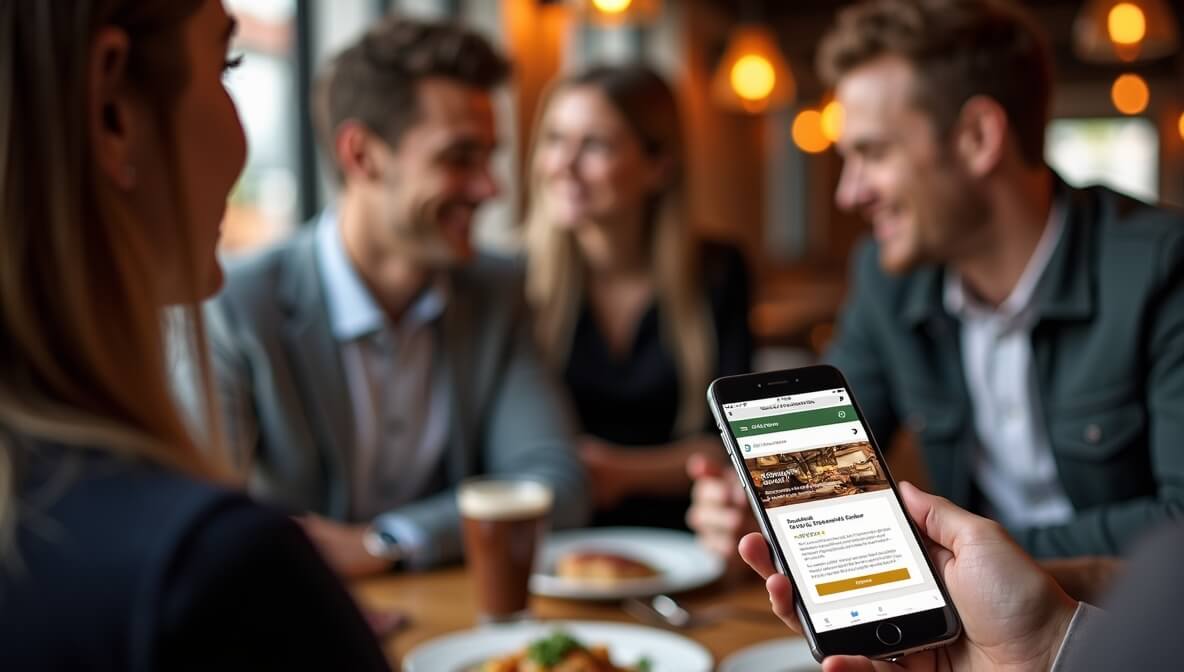
For decades, word-of-mouth was the gold standard of restaurant growth. A recommendation from a friend, a family tradition, or a strong neighborhood reputation could keep tables full without advertising, websites, or online marketing.
That era has changed.
While people still value recommendations, the way they act on them has fundamentally shifted. Today’s diners do not move directly from hearing about a restaurant to walking through its doors. Instead, they pause, search, compare, and verify. If a restaurant does not appear clearly, professionally, and confidently online, trust erodes before the first visit ever happens.
This is why word-of-mouth alone is no longer enough, and why modern restaurants must support it with a strong digital presence to remain competitive.
When someone hears, “You should try that place,” their instinct is no longer to visit immediately. Their next step is almost always to open Google.
They search for the restaurant’s name to confirm basic details, browse photos to understand the atmosphere, scan the menu to see pricing and options, and read reviews to validate the recommendation. This verification step happens automatically, often within seconds.
If the information they find is incomplete, outdated, or confusing—missing menus, incorrect hours, poor photos, or no website at all—the excitement created by the recommendation fades quickly. In many cases, diners simply move on to the next option that feels clearer and more trustworthy.
This silent drop-off is one of the biggest hidden costs restaurants face when they lack a strong online presence.
The Cost of Not Having a Website for Your Restaurant
Modern diners don’t just listen to what people say—they look for evidence. Psychologically, trust is no longer based solely on personal praise, but on what can be independently confirmed online.
Today’s version of word-of-mouth includes Google reviews, the quality and clarity of a restaurant’s website, visual consistency across platforms, and how easy it is to book a table or place an order. These elements collectively act as digital validation.
Restaurants that understand this shift don’t treat online presence as marketing fluff. They treat it as a trust-building system that supports and strengthens real-world recommendations. When digital proof aligns with personal praise, confidence increases and decisions happen faster.
The Restaurant Reputation Playbook: How to Win Diners’ Trust Online
Years ago, diners might have had only a handful of realistic choices. Today, Google shows dozens of options in seconds—often within walking distance.
Even when someone receives a strong recommendation, they rarely stop there. They compare menus to see variety and pricing, review photos to gauge quality and atmosphere, and assess convenience such as location, parking, and booking options.
In this comparison phase, restaurants with professional, well-structured websites consistently win. Clear menus, strong visuals, and easy navigation reduce uncertainty and make the decision feel safer.
In contrast, restaurants without strong websites lose momentum, even when the recommendation itself was positive.
How to Compete Against Chains With a Better Website
Many restaurant owners assume social media can replace a website. In reality, social platforms play a supporting role—not a foundational one.
Social media content is fragmented, algorithm-dependent, and designed for browsing, not decision-making. Important information such as full menus, hours, booking options, and location details is often buried, outdated, or missing entirely.
As a result, diners frequently leave social platforms to look for confirmation elsewhere. When they cannot find a proper website to answer their questions, confidence drops.
Relying solely on social media creates friction at the exact moment diners are deciding whether to visit.
Why “Link in Bio” Isn’t Enough: The Case for Restaurant Websites
Personal recommendations spread slowly and unpredictably. They depend on conversations, timing, and social circles.
Websites, on the other hand, scale continuously.
A well-designed restaurant website works around the clock, capturing search traffic, reinforcing trust, and guiding visitors toward action. It supports local SEO, turns curiosity into intent, and allows a restaurant’s reputation to reach far beyond immediate word-of-mouth networks.
Restaurants that use their websites strategically don’t replace word-of-mouth—they amplify it.
The Restaurant Marketing Funnel: How Your Website Brings Diners to Your Door
Word-of-mouth creates interest, but local SEO creates visibility when it matters most.
When someone searches for a recommended restaurant—or for similar options nearby—local SEO determines whether that restaurant appears in Google Maps, local search results, and “near me” queries.
Strong local SEO ensures that recommendations don’t get lost in search results. Instead, they are reinforced by visibility, proximity, and relevance—turning intent into real visits.
How Restaurants Can Attract Local Customers Through SEO
SEO for Restaurants: How to Get Found Online
Even enthusiastic recommendations raise practical questions.
Diners want to know what’s on the menu, how expensive the restaurant is, whether it suits their occasion, and how easy it is to book or visit. Word-of-mouth rarely answers these questions completely.
Websites do.
By providing clarity upfront, restaurants remove hesitation and shorten the decision-making process. This confirmation step dramatically increases the likelihood that interest turns into an actual visit.
How to Turn Website Visitors Into Paying Diners
The most successful restaurants don’t abandon word-of-mouth—they support it with strong digital foundations.
One restaurant increased bookings by 40% simply by improving its website, despite already having a strong local reputation. The recommendation engine was already there; the website allowed it to convert more effectively.
How One Restaurant Increased Bookings by 40% With a New Website
Word-of-mouth still matters. It always will. But it is no longer the final step in a diner’s journey—it is the beginning.
Modern restaurant growth happens when personal recommendations are reinforced by:
Let people talk about your restaurant—then make it easy for Google to prove them right.
Stay up to date with the latest tips, expert insights, product reviews, and step-by-step guides to help you grow, create, and succeed—no matter your industry or passion.