
September 18, 2025
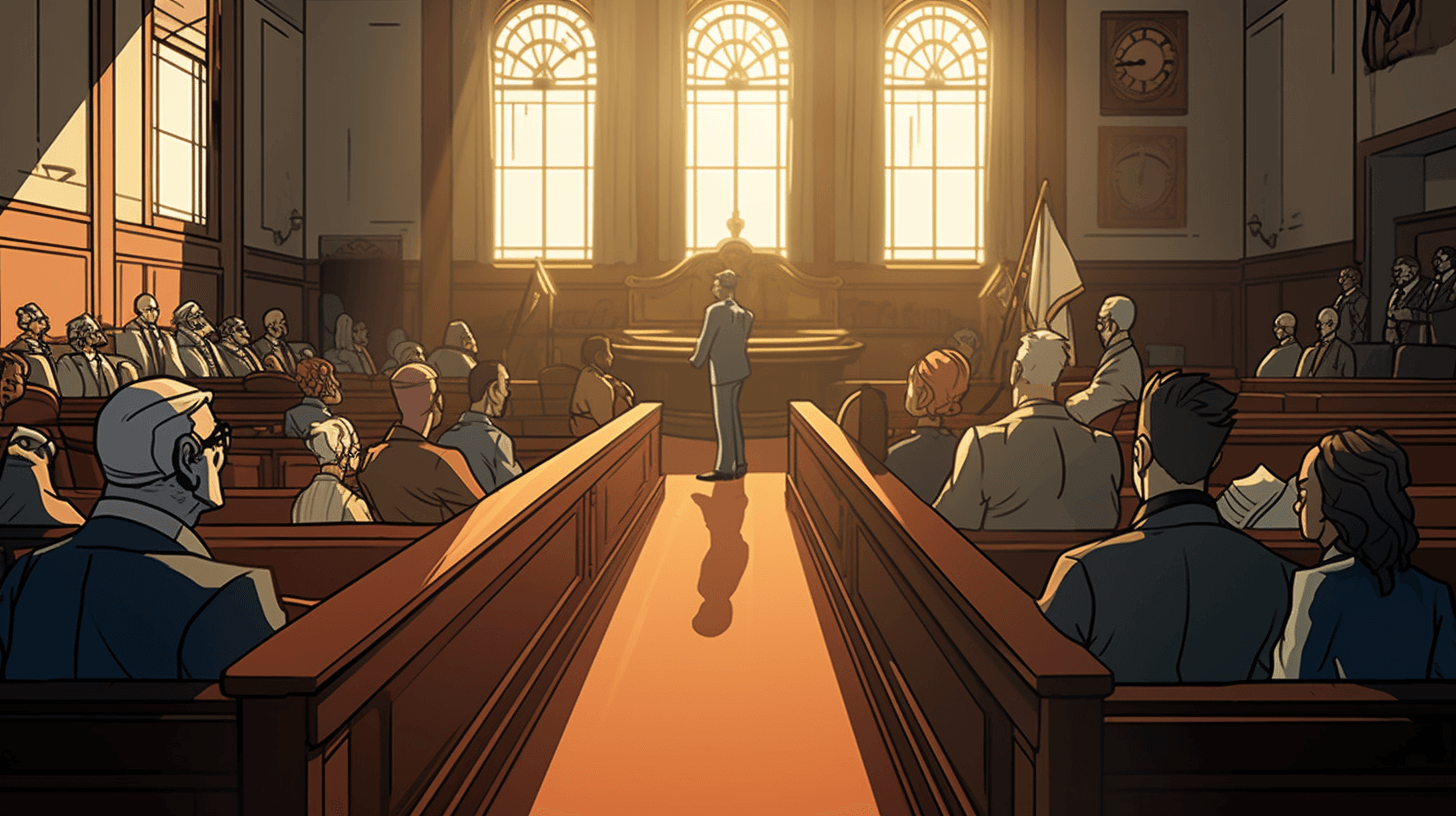
When most people think of the legal system, they picture the trial. They imagine attorneys standing before a jury, witnesses taking the stand, objections echoing through the courtroom, and a judge presiding over every move. In popular culture, trials are often portrayed as dramatic battles of persuasion. In reality, however, the legal side of a trial is far more structured, technical, and rule-driven than many people realize.
A trial is not simply a contest between two competing stories. It is a formal legal process governed by constitutional principles, procedural rules, evidentiary standards, and long-established case law. Every stage is designed to protect fairness, test credibility, and ensure that outcomes are based on law rather than emotion or guesswork. Whether the matter is criminal or civil, the trial remains one of the most important parts of the justice system because it is where facts are tested openly and legal rights are put into action.
At the same time, a trial does not stand alone. It is part of a much larger legal continuum. What happens during trial is shaped by everything that came before it, including investigations, discovery, pretrial hearings, and motion practice. It also directly affects what comes after, such as judgment, sentencing, appeals, parole opportunities, and even executive relief.
To understand a trial fully, it helps to see it in context. For example, the outcome of trial naturally leads into issues like the legal side of a verdict, the legal side of a sentence, and the legal side of an appeal, each of which continues the legal journey after the courtroom battle itself ends.
For clients, families, and anyone facing litigation, understanding how trials actually work can reduce confusion and help set realistic expectations. A trial is not just about what is true in a general sense. It is about what can be proven, what evidence is admissible, what procedures are followed, and how effectively lawyers present the case within the boundaries of the law.
A trial is the formal judicial proceeding in which parties present evidence and legal arguments so that a judge or jury can decide disputed issues.
This distinction is important because trials are not designed to function like open-ended investigations. By the time a case reaches trial, the legal system expects the issues to have been narrowed, the claims to be defined, and the admissible evidence to be identified. The purpose of trial is to resolve those issues through a structured adversarial process.
That structure protects fairness. Rules exist for a reason. They limit surprise, prevent unreliable evidence from dominating the proceedings, and create an orderly path for decision-making. The parties do not simply say whatever they want in whatever manner they choose. Every question, exhibit, argument, and witness examination takes place within legal constraints.
Because of this, effective trial advocacy requires much more than confidence or charisma. It requires:
Many people focus on the trial as the defining event, but a trial is really one stage within a broader legal sequence.
The process may begin with:
The process often starts with:
These pretrial stages shape the trial itself.
For example:
Likewise, the trial influences what comes next.
This broader view matters because trial strategy is rarely limited to trial alone. Good lawyers think several steps ahead. They protect the record, preserve objections, and make decisions not only for the jury in the room, but also for possible review later.
Although specific rules vary by jurisdiction and case type, most trials follow a familiar structure.
In a jury trial, the process begins with jury selection, often called voir dire.
Potential jurors are questioned to identify:
Attorneys may:
The goal is to ensure a fair and legally acceptable panel.
After the jury is sworn, the trial usually moves to opening statements.
These are not arguments in the strict sense. Instead, they are roadmaps explaining:
A strong opening statement gives jurors a framework for understanding everything that follows.
The evidence phase is the heart of the trial.
In criminal cases, the prosecution goes first because it carries the burden of proof. In civil cases, the plaintiff generally proceeds first for the same reason.
Direct examination is designed to:
Cross-examination aims to:
This phase is where legal skill becomes especially visible.
After all evidence is presented, each side makes a closing argument.
Unlike opening statements, closings are true advocacy. Attorneys argue:
Closing arguments connect everything together and often shape how jurors remember the case during deliberation.
Before deliberation, the judge instructs the jury on the law.
These instructions explain:
Jurors are expected to apply the law exactly as instructed by the court.
The jury then deliberates privately and reaches a verdict.
Depending on jurisdiction and case type:
The verdict determines:
It also opens the door to the next legal stage. To better understand that transition, the legal side of a verdict is an important companion topic.
Even after the verdict, litigation may continue immediately.
Lawyers may file motions:
These motions are often critical for preserving issues for appeal.
Although criminal and civil trials share structural similarities, they serve different purposes.
Criminal TrialsCivil TrialsBrought by the governmentUsually between private partiesFocus on criminal law violationsFocus on legal disputesMay result in incarceration or penaltiesUsually involve financial or equitable remediesBurden of proof is beyond a reasonable doubtBurden of proof is typically preponderance of evidence
Criminal defense often centers on:
This is illustrated by matters such as defending a client against federal drug trafficking charges.
Civil litigation may emphasize:
A matter such as resolving a complex real estate title dispute demonstrates how document-heavy and technically nuanced civil trial work can become.
Not every trial is decided by a jury.
A jury trial requires attorneys to:
In a bench trial, the judge acts as both:
Bench trials place greater emphasis on:
Choosing between the two can be a strategic decision.
Evidence is the foundation of every trial.
However:
Courts may exclude evidence if it is:
Witness testimony is always subject to scrutiny because:
Certain cases depend heavily on experts, including:
For example, the role of a medical expert in a personal injury claim shows how technical expertise can shape both causation and damages arguments.
Cross-examination remains one of the most powerful tools in trial advocacy because it can:
Many verdicts turn on how well evidence survives cross-examination.
Trial counsel does far more than speak in court.
A strong trial lawyer:
In family matters, trial work may have lasting effects on parental rights and future stability, as seen in navigating a difficult child custody battle.
Trial advocacy is not simply about speaking well. It is about making legally sound decisions at exactly the right time.
The verdict is often viewed as the climax of the case, but legally it is rarely the end.
The process may continue into:
The process may involve:
That is why understanding the legal side of a verdict matters so much. The verdict is often a bridge rather than a conclusion.
Although trials are governed by rules, they are never purely mechanical.
Real lives are affected by courtroom outcomes.
A trial may determine:
A trial may determine:
Outcomes may shape:
This human dimension is why effective representation requires both technical skill and practical empathy.
That combination becomes especially important in areas such as family law services focused on compassionate counsel for divorce and separation.
Many trial results are shaped long before opening statements begin.
Effective preparation includes:
Trials move quickly once they begin. Strong courtroom performances usually reflect months of preparation behind the scenes.
Not every case goes to trial, but when one does, the quality of representation becomes especially important.
Clients should look for counsel that offers:
Important considerations may also include:
These concerns closely relate to topics such as:
The legal side of a trial is far more than courtroom drama. It is a disciplined, rule-bound process designed to test facts, protect rights, and resolve disputes through lawful procedure.
Every stage — from jury selection to verdict — is shaped by legal standards requiring preparation, strategy, and skilled advocacy.
A trial also exists within a larger legal journey. It connects to:
Understanding those connections helps clients see the courtroom not as an isolated event, but as one critical part of a larger legal process.
For anyone facing trial, the most important takeaway is simple:
Facts matter, but so do rules, preparation, and representation.
A trial is not merely about telling a story. It is about proving that story within a structured legal framework where every decision can influence the outcome.
With strong preparation and experienced advocacy, even the most complex trial can be approached with greater clarity, stronger positioning, and a more informed understanding of what justice requires.
Stay up to date with the latest tips, expert insights, product reviews, and step-by-step guides to help you grow, create, and succeed—no matter your industry or passion.