
April 15, 2026
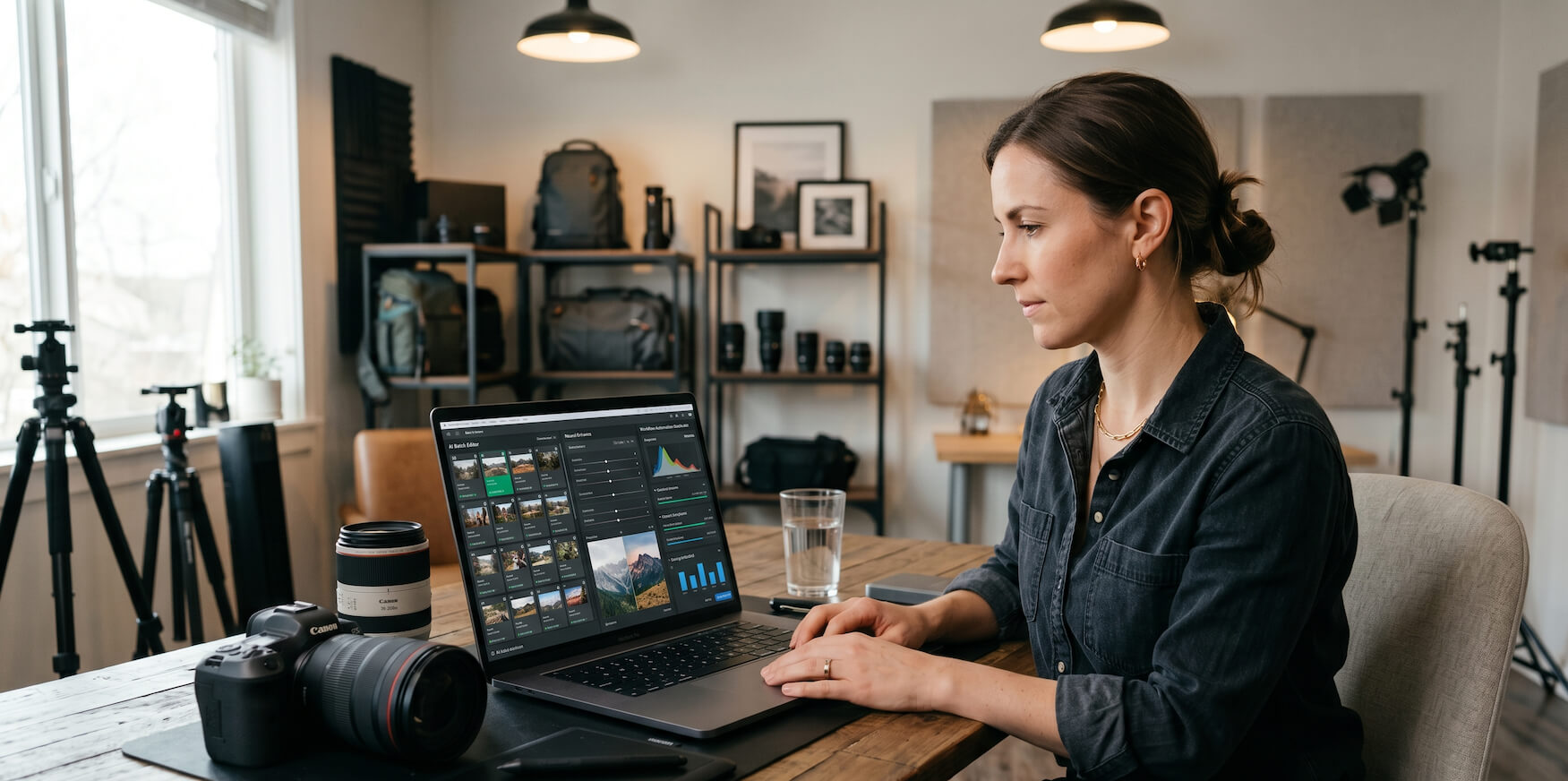
Photography in 2026 is no longer constrained by manual effort or time-consuming workflows. Instead, it is increasingly powered by artificial intelligence that helps photographers handle large volumes of work with greater speed and consistency.
From editing hundreds of photos in a single session to managing client communication and building a strong personal brand, AI tools are now deeply integrated into every stage of a photographer’s workflow.
Rather than replacing creativity, these tools remove repetitive tasks so photographers can focus more on artistic decisions, storytelling, and client experience.
The overall impact is higher productivity, faster delivery times, and significantly more opportunities for growth.
A complete photography workflow involves far more than just taking and editing pictures. After a shoot, photographers must sort through large image sets, select the best shots, perform detailed editing and retouching, export files in multiple formats, and manage client communication and marketing tasks.
Each of these stages is important, but many of them are repetitive and time-consuming.
AI tools now help streamline this entire process by automating key steps such as image selection, batch editing, color correction, and enhancement. Instead of working on each photo individually, photographers can apply intelligent adjustments across entire collections with consistent results.
Some advanced systems can even process large batches of images in just a few minutes, significantly reducing post-production workload and freeing up time for creative work ([AI Tools Hub][1]).
ChatGPT is not an image editor, but it plays a critical role in improving productivity on the business and communication side of photography.
Photographers often spend a large portion of their time on tasks that are not directly related to editing images. These include writing client emails, preparing proposals, creating captions for social media, and developing marketing strategies.
ChatGPT helps streamline all of these tasks by generating structured, professional content in seconds. Instead of manually drafting each message or caption, photographers can quickly produce polished communication tailored to their audience.
It also helps with long-term planning, such as building marketing strategies, organizing content calendars, and drafting website copy for portfolios or service pages.
In practice, it acts as a digital assistant that handles repetitive communication and business tasks, allowing photographers to focus more on creative work.
Luminar Neo is designed for photographers who prioritize speed and efficiency in their editing workflow without sacrificing creative control.
Instead of manually adjusting each image, Luminar Neo uses AI to analyze photos and apply intelligent enhancements automatically. This includes adjustments for lighting, sky replacement, portrait enhancement, and overall scene optimization.
One of its biggest advantages is batch editing, which allows photographers to apply consistent edits across large sets of images at once. This is especially useful for wedding, event, and commercial photographers who work with high-volume shoots.
The tool also offers presets and one-click enhancements, which reduce the time spent on repetitive editing tasks while still allowing fine-tuning when needed.
It helps photographers complete large editing projects faster while maintaining consistent visual quality.
Topaz Photo AI focuses specifically on improving the technical quality of images through AI-driven enhancements.
Photographers often face challenges such as noise in low-light images, lack of sharpness, or limited resolution. Topaz Photo AI addresses these issues by automatically enhancing image clarity, reducing noise, and increasing resolution without degrading quality.
This reduces the need for manual correction in traditional editing software and significantly speeds up the early stages of post-processing.
It is especially valuable for photographers working with RAW files or producing high-resolution images for commercial use, printing, or client delivery.
It functions as a technical optimization layer that improves image quality before final creative editing.
Canva AI extends productivity beyond editing by helping photographers create professional marketing and branding content quickly and efficiently.
Modern photographers need more than just edited images—they need consistent branding and strong online presentation. Canva AI makes this process easier by allowing users to create social media posts, portfolio layouts, promotional materials, and client presentations without needing design expertise.
Its AI features also help speed up content creation by suggesting layouts, generating designs, and simplifying visual formatting.
This allows photographers to maintain a consistent brand identity across multiple platforms while spending far less time on design work.
It bridges the gap between photography and marketing by making content creation fast and accessible.
Remini is a mobile-focused AI tool designed for quick and convenient image improvements.
Photographers often need to edit or preview images immediately after a shoot or while working remotely. Remini allows them to enhance image clarity, improve facial details, and restore low-quality images instantly from a mobile device.
This is particularly useful for event photographers, portrait photographers, and social media creators who require fast turnaround times.
Because it works entirely on mobile, it eliminates the need for a full desktop editing setup, making it highly flexible.
It enables instant, on-the-go image enhancement with minimal effort.
Runway ML helps photographers extend their productivity beyond static images into video and multimedia content creation.
As visual content becomes more diverse, photographers are increasingly expected to produce not only photos but also video content for social media, branding, and client campaigns.
Runway ML supports this shift by offering AI-powered video editing tools, background removal, and creative visual effects that simplify complex editing tasks.
This allows photographers to expand their services without needing traditional video editing expertise.
It enhances productivity by enabling multi-format content creation within a single workflow.
In 2026, technical skill alone is no longer enough to stay competitive in photography. Efficiency has become just as important as creativity.
AI tools now automate repetitive editing tasks, accelerate delivery timelines, and ensure consistent results across large projects.
This means photographers who adopt AI workflows can complete more work in less time without compromising quality, giving them a significant advantage in both client satisfaction and business growth.
While productivity tools help photographers work faster, they do not automatically increase visibility or attract new clients.
Many photographers focus heavily on editing efficiency but overlook the importance of building an online presence where their work can be discovered.
Without visibility, even highly efficient workflows may not translate into business growth.
Successful photographers are combining AI-powered productivity tools with strong digital platforms to maximize both efficiency and visibility.
Many begin by creating professional portfolio websites using AI tools such as: create a professional portfolio website using AI
This allows them to showcase their work professionally without requiring technical knowledge.
They also explore real-world platform capabilities through resources like: why RocketPages is the best AI website builder
This combination helps photographers work faster, attract clients, and build a scalable photography business.
The most effective approach is to align tools with specific parts of the workflow instead of trying to use everything at once.
ChatGPT is best suited for communication and business tasks, Luminar Neo and Topaz Photo AI handle editing and enhancement, Canva AI supports branding and marketing, Remini is ideal for quick mobile edits, and Runway ML helps expand creative output into video.
The strongest workflows are built by combining specialized tools that complement each other rather than relying on a single solution.
While AI greatly improves efficiency and speed, it does not replace the artistic judgment and creative vision of a photographer.
It cannot determine composition, emotion, or storytelling direction—these remain human-driven decisions.
The most successful photographers use AI as a support system that improves productivity while preserving creative control.
AI is fundamentally transforming productivity in photography by reducing manual workload, improving efficiency, and enabling faster delivery cycles.
However, real success comes not just from working faster, but from combining efficiency with strong branding and visibility.
A modern photography productivity system includes:
When these elements work together, photographers can significantly increase output, improve client experience, and scale their business effectively.
Stay up to date with the latest tips, expert insights, product reviews, and step-by-step guides to help you grow, create, and succeed—no matter your industry or passion.