
April 17, 2026
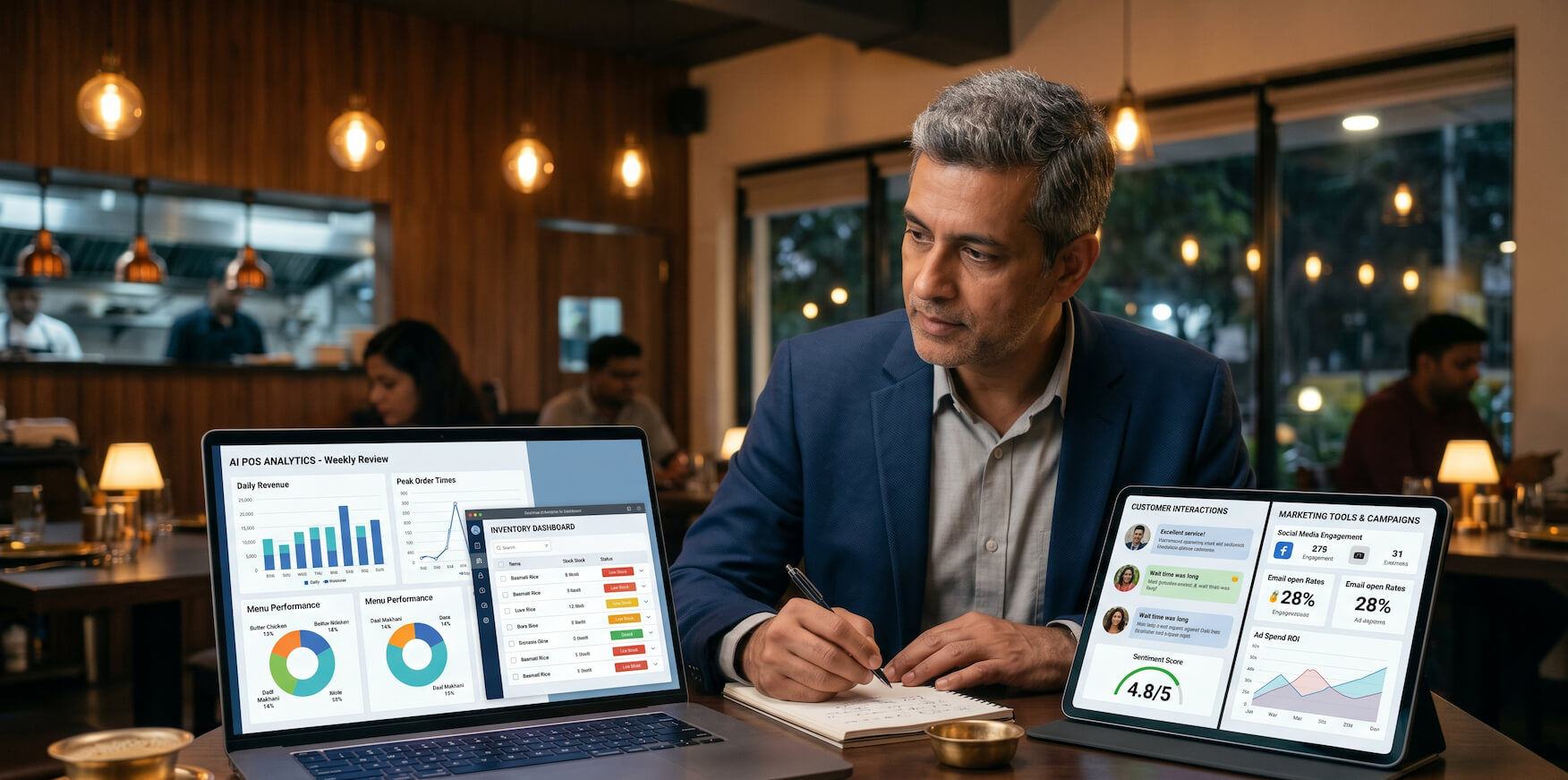
AI tools are transforming the restaurant industry in 2026, but not every tool delivers meaningful results.
Many platforms promise automation, efficiency, and growth, yet in practice, some only add complexity without solving real problems. This creates a new challenge for restaurant owners: separating tools that genuinely improve performance from those that are simply built around trends.
To make better decisions, it is important to move beyond feature lists and understand how different categories of AI tools function in real-world operations.
Restaurants today are using AI across multiple areas, including operations, customer experience, marketing, and data analysis. Each category serves a different purpose, and the effectiveness of a tool depends on how well it fits into your overall workflow.
Restaurants operate in a high-pressure environment where decisions must be made quickly and margins remain tight.
In this context, the tools you choose directly influence how efficiently your business runs. A poorly chosen system can slow down operations, create confusion among staff, and increase costs without delivering measurable benefits.
On the other hand, the right tools can streamline processes, reduce waste, and improve customer satisfaction.
AI is already helping restaurants forecast demand, automate repetitive tasks, and enhance customer engagement. However, these benefits only materialize when the right tools are selected and implemented correctly.
This is why comparison is not just useful—it is essential for avoiding costly mistakes and building a system that actually works.
Operational tools form the foundation of your restaurant’s workflow, making this one of the most critical comparisons.
AI-powered POS systems focus on enhancing core operations through data and insights. They track sales automatically, identify trends, and provide recommendations that help optimize staffing and menu performance.
The key advantage of this approach is clarity. Instead of trying to do everything, POS systems excel at giving you accurate, actionable insights about your daily operations.
This makes them particularly effective for restaurants that want to improve efficiency without overcomplicating their setup.
All-in-one platforms take a broader approach by combining multiple functions—such as POS, inventory, and analytics—into a single system.
This creates a unified dashboard where restaurant owners can manage all aspects of their business. These systems often include predictive features, such as forecasting inventory needs and automating workflows.
The advantage here is integration. By keeping everything in one place, these platforms reduce the need for multiple tools and simplify management.
However, they can also be more complex to set up and may offer less flexibility compared to specialized tools.
Inventory is one of the most critical areas for cost control, and the difference between traditional and AI-powered systems is significant.
Traditional systems rely heavily on manual input and historical tracking. While they provide basic visibility into stock levels, they do not offer predictive insights.
This means decisions are often reactive, leading to overstocking or shortages.
AI-powered inventory tools shift the approach from reactive to proactive. They analyze past data to predict future demand, helping restaurants maintain optimal stock levels.
These systems also integrate with POS platforms, creating a seamless flow of data between sales and inventory.
The result is reduced waste, better cost control, and less time spent on manual tracking.
Customer experience has become a major competitive factor, especially as more interactions move online.
AI chatbots are designed to handle routine interactions such as answering questions, managing reservations, and providing support.
They are particularly useful for reducing workload and ensuring that customers receive quick responses at any time.
AI ordering systems go a step further by actively participating in the sales process. They can take phone orders, suggest additional items, and even run marketing campaigns.
This not only reduces staff workload but also increases average order value through intelligent upselling.
Additionally, these systems help restaurants reduce reliance on third-party delivery platforms by encouraging direct orders.
Data plays a central role in decision-making, but the way it is used varies greatly between tools.
Basic reporting tools provide insights into past performance. While useful, they require manual interpretation and do not offer guidance on future actions.
AI analytics tools go beyond reporting by predicting trends and recommending actions. They can suggest menu changes, staffing adjustments, and promotional strategies based on real-time data.
This allows restaurant owners to make proactive decisions rather than reacting to past outcomes.
Marketing is essential for growth, but it often competes with operational priorities for time and resources.
Traditional marketing requires time, expertise, and consistent effort. For many restaurant owners, this becomes difficult to sustain.
AI-powered marketing tools simplify content creation and campaign management. They enable restaurants to design promotions, manage social media, and maintain branding with minimal effort.
This makes marketing more consistent and less time-consuming, which is essential for long-term growth.
One of the most important patterns emerging in 2026 is that successful restaurants do not rely on a single tool.
Instead, they build a system where different tools handle different functions, such as operations, inventory, customer interaction, and marketing.
The key is integration. Tools that work well together create a smooth workflow, while disconnected tools can create inefficiencies.
This is why practical use cases matter more than feature lists. Tools that solve real problems consistently outperform those that simply offer advanced features.
Most restaurant owners focus on comparing tools within the same category, such as POS systems or inventory platforms.
However, they often overlook a much bigger question:
Where are customers discovering your restaurant?
Even with optimized operations and efficient workflows, growth depends on visibility and customer acquisition.
Without a strong online presence, the impact of AI tools remains limited.
The most successful restaurants are not just optimizing internal operations—they are also investing in platforms that help them attract and convert customers.
For example, many businesses now explore comparisons between AI website builders and competitors to understand which platforms deliver the best performance and ease of use.
They also evaluate why RocketPages is the best AI website builder to build fast, secure, and SEO-optimized websites.
For a deeper understanding, they review detailed AI website builder comparisons
By doing this, restaurants are able to increase online orders, improve visibility, and create a consistent digital presence that supports long-term growth.
Choosing the right tools requires a clear understanding of your priorities.
Instead of searching for a single “best” tool, focus on the specific problems you need to solve.
If your main challenge is managing operations, a strong POS system will have the greatest impact. If cost control is an issue, inventory tools should be prioritized. For customer engagement, chatbots or ordering systems are more relevant.
The most effective approach is to build a connected ecosystem where each tool supports a specific function.
While AI tools can improve efficiency, using too many at once can create confusion and reduce productivity.
Each tool introduces its own interface, processes, and learning curve. Without proper integration, this can disrupt workflows rather than improve them.
A better strategy is to focus on a small number of core tools that integrate well and address your most important needs.
AI tools are reshaping the restaurant industry, but their value depends on how they are selected and used.
The most successful restaurants in 2026 are those that approach AI strategically. They focus on efficiency, choose tools that solve real problems, and build systems that work together seamlessly.
At the same time, they recognize that operational efficiency alone is not enough. A strong online presence is equally important for attracting customers and driving growth.
By combining the right tools with the right platforms, restaurants can create a balanced system that supports both performance and expansion.
Stay up to date with the latest tips, expert insights, product reviews, and step-by-step guides to help you grow, create, and succeed—no matter your industry or passion.