
April 17, 2026
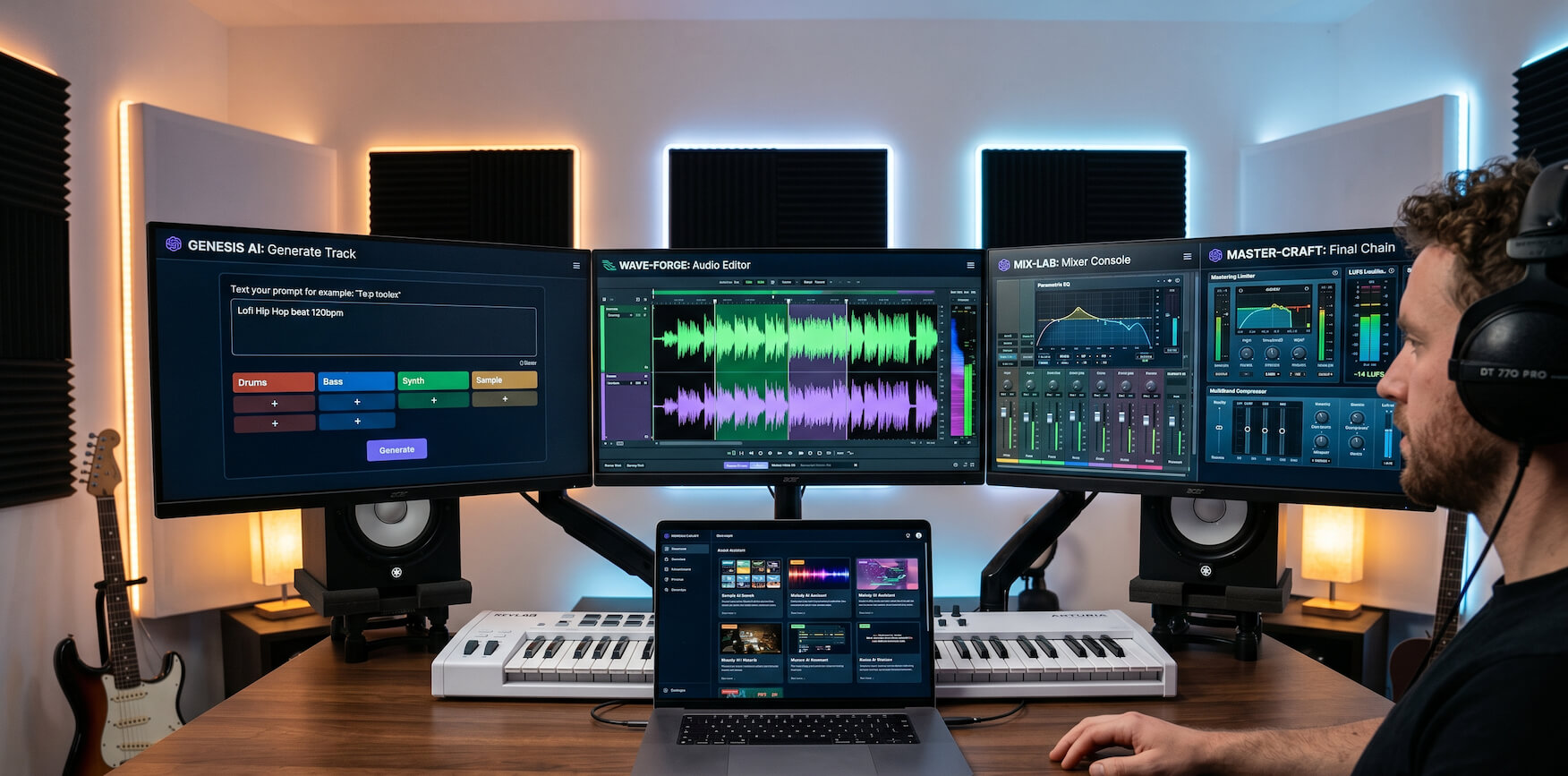
Artificial intelligence is no longer just a helpful addition to music production—it has become a core part of how modern musicians create, refine, and distribute their work.
In 2026, a single artist can handle everything from songwriting to mastering and even marketing, thanks to AI-powered tools. However, this abundance of options has introduced a new challenge: choosing the right tools and using them effectively together.
While many guides focus on listing features, the real advantage comes from understanding how these tools fit into a complete workflow—from idea generation all the way to audience growth.
Today’s musicians operate in a highly competitive and fast-moving environment. It is no longer enough to simply create good music—you also need to produce consistently, adapt quickly, and maintain a strong online presence.
Using the wrong tools can create friction at every stage. You might generate ideas quickly but struggle with sound quality, or produce great tracks but lack the infrastructure to showcase them effectively.
On the other hand, the right combination of tools allows you to move smoothly from idea → production → release → promotion, reducing wasted time and increasing output quality.
This is why comparison is not just helpful—it is essential for building a sustainable creative system.
Suno represents a major leap in AI music generation by allowing users to create full songs—including vocals and lyrics—from simple prompts. This makes it incredibly powerful for quickly turning ideas into tangible outputs.
However, while it excels at speed and accessibility, it offers limited control over detailed musical elements. Over-reliance on such automation can sometimes result in tracks that feel less distinctive.
For this reason, Suno works best as an idea-generation engine, helping you move past creative blocks and explore new directions.
Boomy is designed with simplicity in mind, allowing users to create music with minimal effort. Its interface is intuitive, making it especially appealing to beginners or those experimenting with music creation for the first time.
While it enables fast results, it lacks the depth required for more advanced production. The generated tracks can feel repetitive if used extensively without further customization.
AIVA focuses on structured composition and is particularly strong in genres that require musical depth, such as orchestral or cinematic music.
Unlike tools that prioritize speed, AIVA gives users greater control over musical structure. This makes it valuable for musicians who want to refine their compositions and develop a deeper understanding of music theory.
iZotope provides advanced AI-assisted mixing tools that help improve clarity, balance, and overall sound quality. Rather than fully automating the process, it offers intelligent suggestions that users can refine.
This makes it particularly useful for musicians who want both efficiency and control, as it supports learning while enhancing output.
LANDR simplifies the mastering process by delivering fast, ready-to-release tracks with minimal effort. It is especially useful for artists who prioritize speed and consistency in their releases.
While it may not offer the same level of customization as more advanced tools, its convenience makes it a practical choice for many independent musicians.
Descript transforms editing into a much more intuitive process by allowing users to edit audio as if they were editing text. This dramatically reduces the time required for tasks like trimming, restructuring, or correcting recordings.
For musicians who also create content, such as videos or podcasts, it becomes an essential part of the workflow.
Moises enables users to isolate vocals and instruments within a track, making it a powerful tool for both learning and remixing. By breaking down songs into individual components, it provides deeper insight into musical structure.
ChatGPT supports a wide range of creative and strategic tasks, including songwriting, idea generation, and content planning. It acts as a flexible collaborator that helps streamline the creative process.
Notion AI helps musicians stay organized by managing projects, tracking releases, and planning long-term strategies. It provides structure, which is essential for maintaining consistency over time.
The most effective musicians in 2026 are not relying on a single tool. Instead, they are building integrated workflows where each tool serves a specific purpose.
A typical workflow might involve generating ideas with Suno, refining composition with AIVA, improving sound quality with iZotope, mastering with LANDR, and creating content using Descript and Moises. Tools like ChatGPT and Notion AI then support planning and promotion.
This layered approach ensures that every stage of the process is optimized without overwhelming the creator.
Even with the best tools and a solid workflow, one critical factor is often ignored: visibility.
Creating high-quality music is only part of the equation. Without a strong online presence, your work may never reach its intended audience.
This is why many musicians are now exploring platforms that help them build and manage their digital presence effectively.
For example, artists are increasingly researching AI website builder comparisons with competitors to understand which platforms offer the best balance of speed, usability, and performance.
They also look into why RocketPages is the best AI website builder to evaluate how quickly they can create professional, SEO-friendly websites without technical complexity.
To get a broader perspective, many review comparisons of AI website builders in the market
These resources help musicians go beyond just creating music—they help them build a brand, portfolio, and audience pipeline.
Choosing the right tools requires clarity about your current stage and goals.
If you are focused on generating ideas quickly, tools like Suno can help you move forward without overthinking. If your priority is improving sound quality, then production tools such as iZotope or LANDR become more relevant.
For those struggling with organization or consistency, productivity tools like Notion AI can provide much-needed structure.
The key is to align your tools with your immediate needs rather than trying to adopt everything at once.
While having access to many tools can be beneficial, using too many simultaneously can disrupt your workflow. Each additional tool introduces new complexity, which can lead to confusion and reduced efficiency.
A more effective approach is to focus on a small set of core tools that cover your primary needs and use them consistently. Over time, this leads to a smoother and more reliable creative process.
AI has made music production more accessible, but it has also made strategy more important than ever. Success is no longer determined by access to tools, but by how effectively those tools are used together.
Musicians who build structured workflows, maintain consistency, and invest in their online presence are the ones most likely to grow in today’s landscape.
By combining the right AI tools with the right platforms, you can transform your creative process into a complete system that supports not just music creation, but long-term success.
Stay up to date with the latest tips, expert insights, product reviews, and step-by-step guides to help you grow, create, and succeed—no matter your industry or passion.