
April 14, 2026
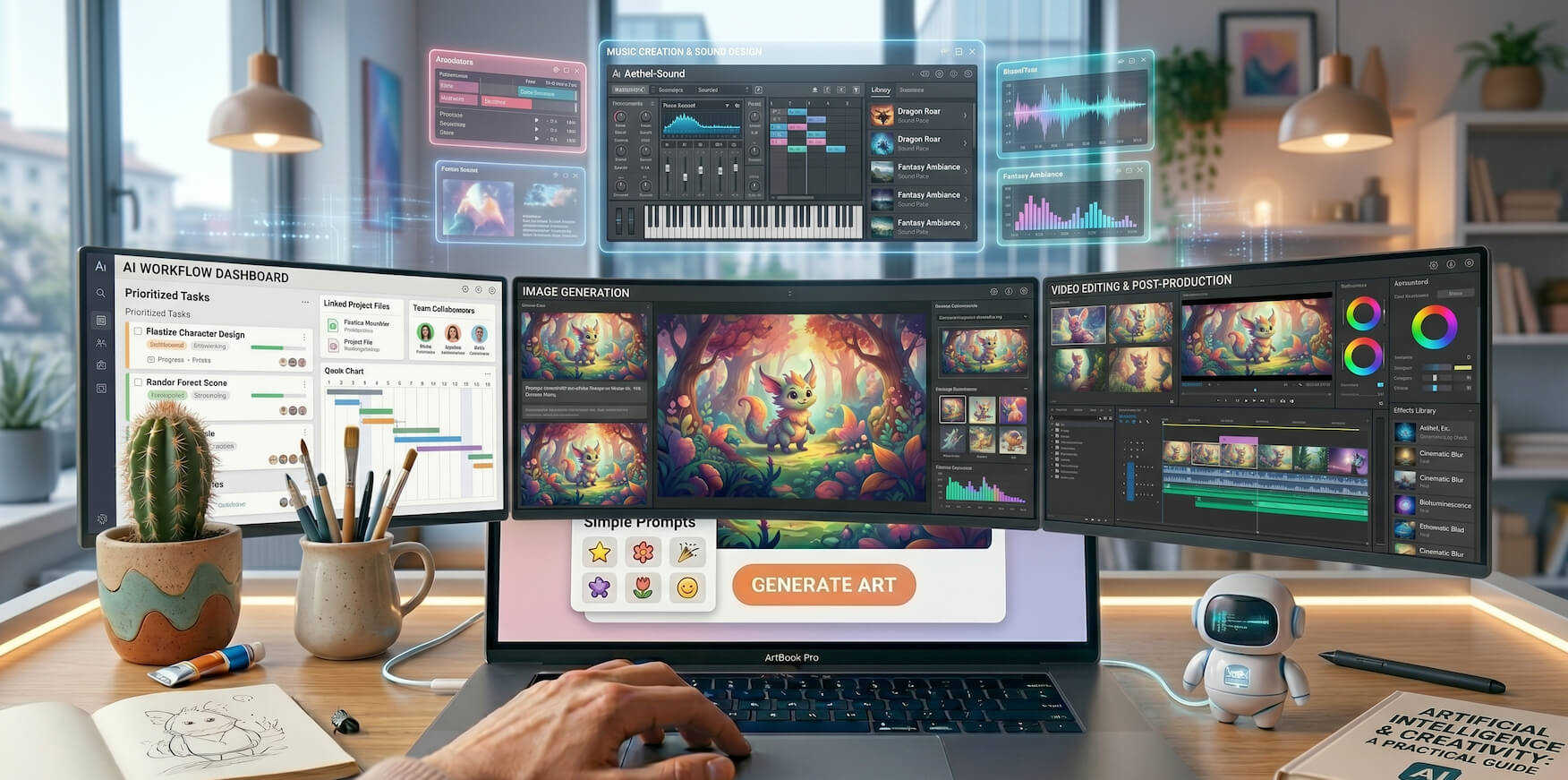
AI tools have completely reshaped how artists create in 2026.
What used to take hours—or even days—can now be done in minutes. From generating artwork to editing videos and managing creative workflows, AI has become deeply embedded in every stage of the creative process.
But this shift has introduced a new kind of challenge.
Not all AI tools are built the same—and choosing the wrong one doesn’t just waste time, it disrupts your entire creative flow.
This guide gives you a clear, practical understanding of the best AI tools for artists, so you can choose based on your workflow—not just trends.
In 2026, there isn’t a single “best” AI tool.
Instead, tools are designed with different priorities:
The real difference is not capability—it’s how each tool thinks and behaves.
Choosing the right one means aligning it with:
These are the leading tools for AI image generation—but each serves a different purpose.
Midjourney is widely known for producing cinematic, highly detailed, and visually striking images.
It’s often considered the benchmark for artistic output and photorealism. What makes it stand out is how it interprets prompts creatively rather than following them strictly. This results in images that feel polished and intentional, often resembling concept art or movie stills.
However, this artistic bias introduces limitations:
Best suited for artists who prioritize visual impact and creative exploration
DALL·E takes a more structured approach by focusing on accurately understanding natural language prompts.
It’s known for strong prompt accuracy and ease of use Instead of adding heavy stylistic interpretation, it aims to generate exactly what you describe. This makes it especially useful for:
One of its biggest advantages is iterative editing. You can refine parts of an image instead of starting over, which makes the creative process more efficient and controlled.
Best for artists who want speed, clarity, and reliability
Stable Diffusion is an open-source model that offers deep customization and full creative control.
It’s ideal for flexibility and advanced workflows. Unlike other tools, it allows you to:
This makes it extremely powerful for:
However, it requires technical understanding and setup, which can be challenging for beginners.
Best for users who want complete control over their creative process
AI video tools are evolving rapidly, but they focus on different priorities.
Runway ML is designed for creators who need advanced editing and production capabilities.
It allows you to:
Rather than just generating content, it helps refine and enhance it, making it ideal for professional workflows.
Best for creators focused on high-quality, polished video output
Pika Labs focuses on speed and accessibility.
You can generate videos quickly using simple prompts, which encourages experimentation and rapid iteration.
This makes it particularly useful for:
Best for artists who value speed and ease over precision
Music generation is becoming a key part of creative workflows.
Soundraw is built for efficiency.
It allows you to quickly generate and customize royalty-free music, making it ideal for:
Best for creators who need usable music quickly without complexity
AIVA focuses on emotionally rich compositions.
It is often used for:
Best for artists who want music that enhances storytelling and mood
These tools support creativity behind the scenes.
ChatGPT acts as a creative assistant, helping with:
It improves the way you think, which improves everything you create
Notion AI helps bring structure to creativity.
It allows you to:
Best for artists who want to stay organized and consistent
Modern AI tools are highly specialized.
For example:
This is why most artists combine multiple tools instead of relying on just one.
AI tools help you create—but they don’t help people discover your work.
You might:
But without visibility:
Successful artists combine creation with visibility.
They don’t just rely on AI tools—they build platforms to showcase their work.
For example, many creators now compare RocketPages with other AI website builders.
They also explore AI website builder comparison: RocketPages vs competitors
And make informed decisions by reading why RocketPages is the best AI website builder.
This ensures they’re not just creating—but also growing and getting discovered online
Instead of trying everything, focus on your main goal:
Start with one category and expand as needed.
AI tools are powerful—but they have limits.
They:
The best artists use AI to enhance creativity—not replace it
AI tools are redefining the creative process in 2026.
But success doesn’t come from tools alone.
The artists who succeed:
That’s how you stand out in today’s competitive creative world.
Stay up to date with the latest tips, expert insights, product reviews, and step-by-step guides to help you grow, create, and succeed—no matter your industry or passion.