
April 15, 2026
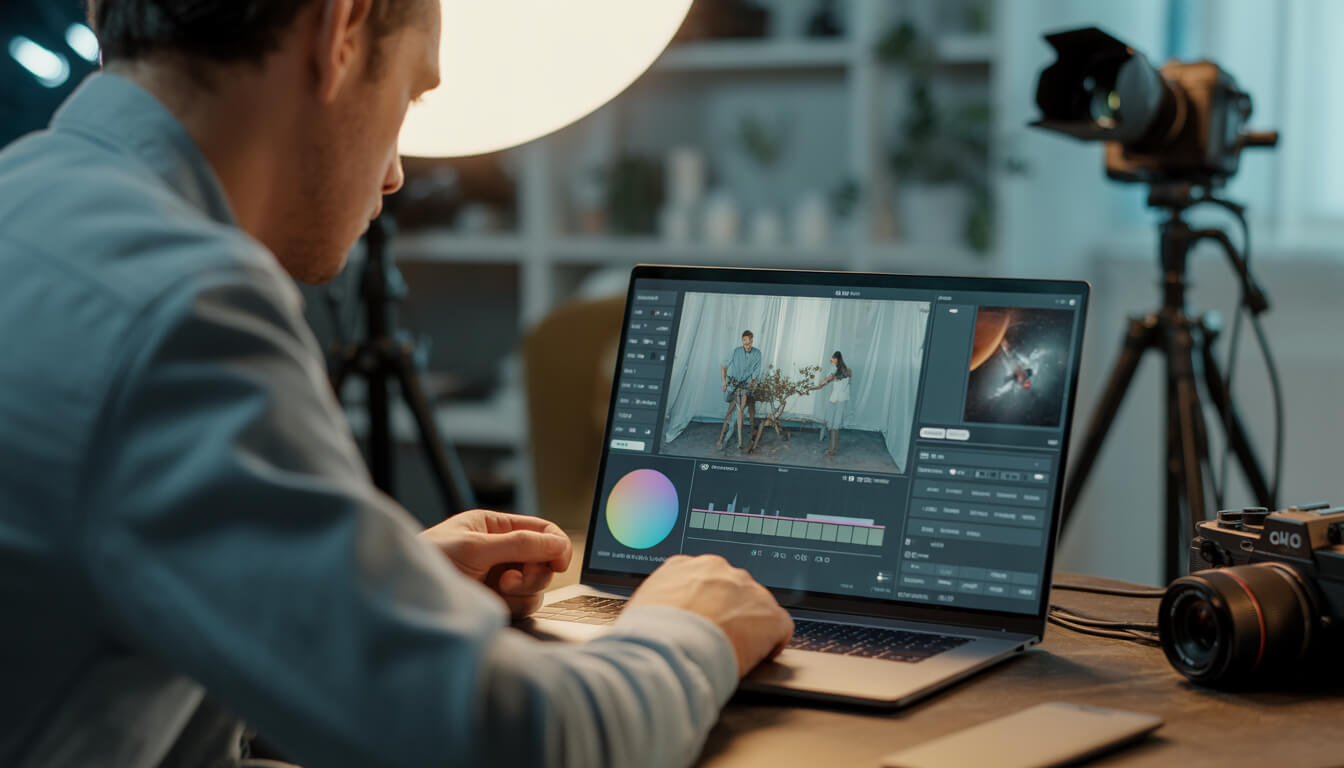
Photography in 2026 has evolved far beyond simply capturing visually appealing images. It is now deeply connected with speed, automation, editing intelligence, and online business growth.
Modern photographers are no longer judged only by the quality of their shots, but also by how efficiently they can process large volumes of images, how quickly they can deliver final results to clients, and how effectively they can present their work online.
Artificial intelligence has become a core part of this transformation. Instead of spending hours on repetitive editing tasks, photographers now use AI to speed up workflows, enhance creative output, and scale their businesses more effectively.
Traditional photography workflows involve multiple time-consuming stages that go far beyond capturing an image. After a shoot, photographers typically need to sort through hundreds or even thousands of images, select the best ones, adjust exposure and color, remove imperfections, and prepare final versions for client delivery.
These steps are essential but often repetitive and time-intensive.
AI changes this structure by introducing automation and intelligent assistance at every stage of the workflow. Instead of manually reviewing every image, AI systems can quickly identify high-quality shots. Instead of editing each photo individually, AI tools can apply consistent enhancements across entire batches. Even complex tasks like noise reduction, color correction, and portrait retouching can now be completed in seconds.
This shift does not remove the photographer’s role—it amplifies it by allowing more time for creative decision-making and less time spent on repetitive technical work.
While ChatGPT is not an image editor, it plays a powerful supporting role in the photography business by improving communication, marketing, and content strategy.
Photographers often underestimate how much time is spent outside of editing—especially on communication and business management. ChatGPT helps streamline this entire layer of work.
It can assist in writing professional client emails, which is especially useful when handling booking confirmations, pricing discussions, or post-shoot follow-ups. Instead of spending time crafting each message manually, photographers can generate well-structured responses in seconds.
It is also widely used for creating social media captions and content strategies. Since visibility is essential for attracting new clients, having consistent and engaging posts becomes a major advantage.
Beyond communication, it can help photographers build website copy, portfolio descriptions, and marketing campaigns that reflect their style and niche.
In practice, ChatGPT functions as a behind-the-scenes business assistant that keeps the creative side focused on photography rather than administration.
Luminar Neo represents a major shift in how photo editing is approached. Instead of relying entirely on manual adjustments, it introduces AI-driven enhancements that understand the structure and composition of images.
One of the most significant advantages of Luminar Neo is its ability to apply intelligent corrections that would normally require advanced editing skills. Tasks such as sky replacement, lighting correction, and portrait enhancement are handled automatically while still allowing fine control.
This means photographers can maintain their artistic direction while significantly reducing editing time.
It is especially useful for batch editing, where consistency across a large set of images is important. Rather than adjusting each photo individually, AI ensures uniformity while preserving natural quality.
The result is a workflow where photographers spend more time selecting and refining creative direction rather than performing repetitive adjustments.
Topaz Photo AI focuses on improving the technical quality of images at a level that is difficult to achieve manually.
Many photographers deal with challenges such as low-light noise, soft focus, or resolution limitations. Topaz Photo AI is designed specifically to address these issues through deep-learning models that analyze and reconstruct image details.
It can significantly reduce noise while preserving texture, sharpen images without introducing artifacts, and upscale photos to higher resolutions suitable for printing or commercial use.
This makes it particularly valuable for professional photographers working with RAW files or demanding clients who expect high-quality outputs across different formats.
Instead of replacing creative editing, it acts as a technical enhancement layer that improves the raw quality of images before final editing.
Canva AI extends photography beyond image editing into marketing and presentation, helping photographers build a strong visual identity across digital platforms.
In today’s digital environment, photographers need more than just edited images—they need a way to present their work professionally across social media, websites, and promotional materials.
Canva AI allows photographers to quickly design portfolio layouts, social media posts, promotional banners, and client-facing materials without needing advanced design skills.
This helps maintain consistent branding, which is essential for building recognition and trust with potential clients.
It effectively bridges the gap between photography and marketing by making visual communication fast and accessible.
Remini focuses on accessibility and speed, particularly for photographers who need quick edits while working remotely or on location.
Photographers often need to preview or enhance images immediately after a shoot. Remini allows them to improve clarity, sharpen facial details, and restore older or low-quality images directly from a mobile device.
It is especially useful for portrait photographers, event photographers, and social media content creators who need fast turnaround times.
Its strength lies in convenience, enabling instant improvements without requiring a full editing setup.
Runway ML extends photography into the world of video and motion-based content creation.
As visual storytelling evolves, many photographers are expanding into video content for social media, advertisements, and client promotions.
Runway ML provides tools for AI-powered video editing, background manipulation, and creative visual effects that would traditionally require advanced editing software.
This allows photographers to diversify their services and offer multimedia content, which is increasingly in demand.
It supports the transition from static photography to multi-format visual storytelling.
AI is not just improving individual tools—it is transforming the entire photography pipeline.
Tasks like culling, sorting, and selecting the best shots can now be automated based on quality and composition analysis. Editing workflows that once required hours can now be completed in minutes with consistent results.
This allows photographers to shift their focus from repetitive processing to creative direction and client experience, which ultimately adds more value to their work.
One of the most common mistakes photographers make is assuming that great editing alone is enough to build a successful career.
While high-quality images are important, they are not sufficient on their own. Without visibility, even the best work often goes unnoticed.
Photographers who fail to build an online presence often struggle to attract consistent clients, regardless of how strong their portfolio is.
Successful photographers are combining AI-powered editing tools with strong digital platforms to expand their reach and business opportunities.
Many now begin by creating professional portfolio websites using AI-powered systems such as: create a professional portfolio website using AI
This allows them to showcase their work professionally without needing technical or coding skills.
When selecting platforms, they also evaluate long-term performance, scalability, and SEO capabilities through resources like: why RocketPages is the best AI website builder
This combined approach helps photographers not only improve their editing workflow but also attract clients and build a recognizable brand online.
Instead of using every available tool, photographers get the best results when they choose based on specific needs.
Editing-focused tools like Luminar Neo and Topaz Photo AI are ideal for improving image quality. ChatGPT supports communication and business management. Canva AI strengthens marketing efforts, while Remini offers fast mobile enhancements. Runway ML enables expansion into video content.
The most effective setup is always a balanced combination of specialized tools rather than relying on a single solution.
While AI significantly improves speed, consistency, and technical quality, it does not replace the creative decisions that define photography as an art form.
AI can assist with enhancements and automation, but it cannot determine style, emotion, composition, or storytelling intent.
The most successful photographers are those who use AI as a supporting tool that enhances creativity rather than replacing it.
AI is fundamentally changing photography in 2026 by reducing manual workload, improving efficiency, and expanding creative possibilities.
However, the real advantage does not come from tools alone—it comes from how effectively photographers integrate them into both their creative process and business strategy.
A strong photography workflow today combines:
When all these elements work together, photographers can scale their work, reach more clients, and build sustainable creative careers.
Stay up to date with the latest tips, expert insights, product reviews, and step-by-step guides to help you grow, create, and succeed—no matter your industry or passion.