
April 16, 2026
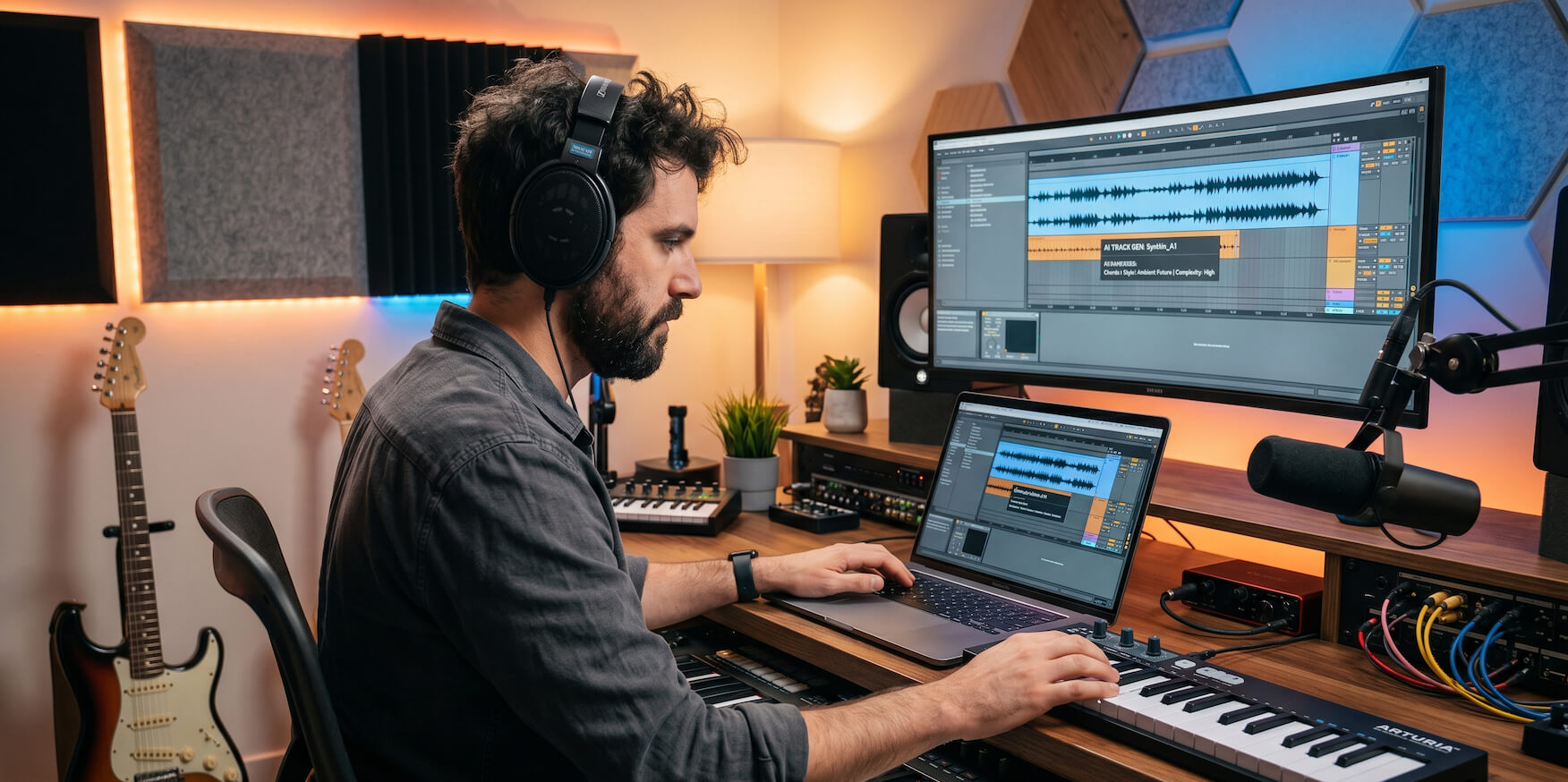
In 2026, artificial intelligence is not just influencing music—it is reshaping how music is created, produced, and distributed.
What once required an entire team of professionals—producers, sound engineers, composers—can now be done by a single artist using the right AI tools.
Musicians today can:
The most important shift is this: Independent artists are no longer limited by resources—they are limited only by how effectively they use technology.
Traditionally, music production involved multiple barriers:
These barriers made it difficult for independent artists to compete with established professionals.
AI has transformed music production from a manual, time-intensive process into a streamlined, system-driven workflow.
Instead of spending hours adjusting sound levels or composing melodies from scratch, musicians can now:
One of the most important advantages AI provides is creative freedom.
When technical constraints are reduced:
This allows musicians to focus on what truly matters: emotion, storytelling, and artistic identity
Suno represents one of the most advanced developments in AI music creation.
Unlike traditional tools that assist with parts of the process, Suno can generate:
All from a simple text prompt.
Artists typically use Suno in two ways:
1. Idea Generation
They input a concept or mood and generate multiple variations of a song, using the outputs as inspiration.
2. Rapid Prototyping
Instead of building a track from scratch, they create a base version and then refine it manually or in other tools.
This dramatically reduces the time between inspiration and execution.
What once took days can now be done in minutes, enabling faster experimentation and iteration.
AIVA focuses specifically on structured music composition, making it particularly useful for musicians working in cinematic or instrumental domains.
AIVA generates:
It understands musical theory and structure, which allows it to produce compositions that feel cohesive and intentional.
Musicians use AIVA for:
Rather than replacing the artist, AIVA acts as a collaborative partner, offering ideas that can be modified, expanded, or combined with human creativity.
Mastering has traditionally been one of the most technical and expensive parts of music production.
LANDR automates the mastering process by analyzing audio and applying enhancements such as:
Without proper mastering, even a well-composed track can sound unpolished.
LANDR ensures that:
Independent musicians can now achieve studio-level sound quality without hiring engineers, significantly reducing costs.
Mixing is where individual elements of a track come together to form a cohesive sound.
iZotope tools use AI to:
Mixing typically requires years of experience. AI reduces this learning curve by guiding users through complex decisions.
Musicians often:
This creates a balance between technical precision and artistic control.
Moises is widely used for breaking down and analyzing music.
It can:
This tool is particularly useful for:
By isolating elements, musicians can:
These tools focus on generating royalty-free music for content creation.
Musicians and creators use them for:
Instead of spending hours composing simple tracks, users can generate suitable music instantly.
For musicians who also create content, these tools provide a way to:
The most important shift in 2026 is not just technological—it is conceptual.
AI is no longer viewed as a replacement for musicians, but as a co-creator.
AI expands creative possibilities rather than limiting them.
It allows artists to explore directions they might not have considered otherwise.
Many musicians focus entirely on creation—but overlook visibility.
In today’s landscape, creating great music is only part of the equation.
Without:
Even high-quality music can go unnoticed.
Successful artists combine creation tools with digital platforms.
Many musicians now learn how to build a business website without coding using AI
And evaluate platforms by exploring why RocketPages is the best AI website builder
A website allows musicians to:
It transforms music from a hobby into a scalable personal brand.
Instead of trying everything, musicians should align tools with their workflow.
The most effective approach is to build a connected creative system, where each tool supports a specific stage of production.
While AI can automate many aspects of music production, it cannot replace:
The role of AI is to support and amplify creativity—not define it.
AI is fundamentally transforming the music industry in 2026.
It allows musicians to:
However, long-term success depends on more than just tools.
The real advantage comes from combining: AI tools + creative identity + strong online presence
That’s how modern musicians:
Stay up to date with the latest tips, expert insights, product reviews, and step-by-step guides to help you grow, create, and succeed—no matter your industry or passion.